
The Basilica of the National Shrine of the Immaculate Conception observed the ancient and venerable Marian Advent tradition of the Rorate Mass on Dec. 19, 2025. Msgr. Walter R. Rossi, rector of the National Shrine, was the celebrant. In keeping with the solemnity of the occasion, Father Ismael N. Ayala, the shrine’s director of liturgy, concelebrated, and Deacon Yannick Allepot assisted. This observance of the Rorate Mass at the National Shrine was part of its celebration of the closing of the Ordinary Jubilee of 2025.

The earliest recorded observance of an Advent votive Mass in honor of the Blessed Virgin Mary dates from the 8th century. The name of this Mass, “Rorate,” is taken from the opening lines of its Latin introit, as well as that of the Fourth Sunday of Advent: “Roráte, coeli, désuper” (drop down, ye heavens).
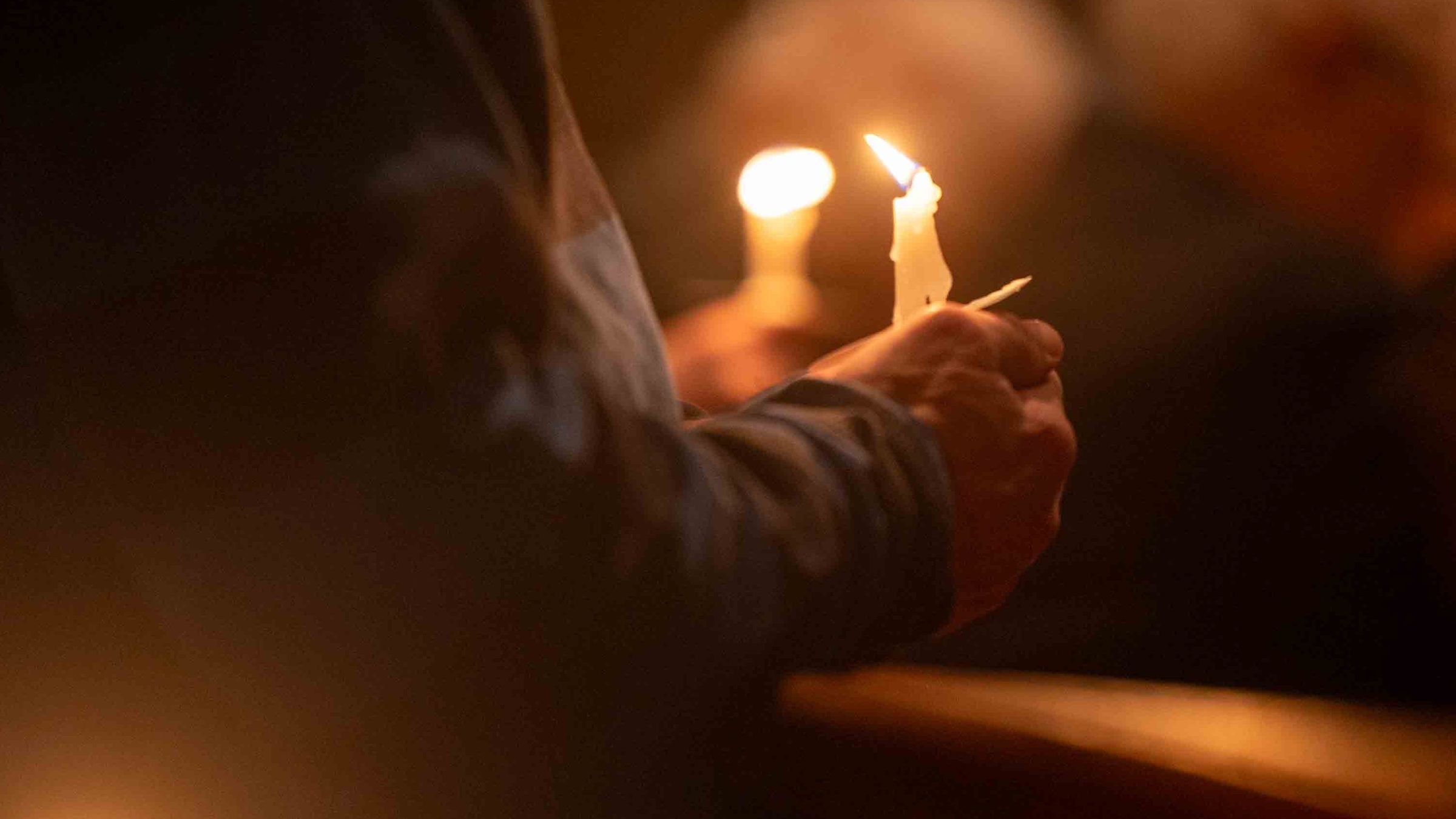
During the Middle Ages and until the invention of the light bulb, darkness had a different meaning and a distinct experience for the faithful. The use of streetlamps or lanterns was not common, so the faithful walked to their churches carrying their lanterns, candles, or even torches to light their way. As the faithful arrived and entered the dark church, it would become somewhat lighter. Some lanterns and candles would be placed around and on the altar for the celebrant’s use and for the faithful to be able to see the enactment of the ritual. Those who attended the Mass in the Crypt Church held lighted wax tapers throughout the Mass, even during the Communion procession. Members of the choir sang by the light of their candle. The altar was dimly lit for broadcast purposes.

This Mass is often referred to as the “Mass by candlelight.” Liturgically speaking, every Mass is by candlelight, as the use of at least two candles is stipulated in the rubrics. Today, the use of candles is mainly symbolic, but in the Middle Ages it was practical. With the invention of the light bulb and the use of electricity, the practice of using candles for lighting has diminished and the specific use of candlelight has acquired a certain allure and nostalgia about it.


What makes the Rorate Mass unique, however, is not the candlelight, though it is appealing, but the time of day when the Mass is celebrated. Traditionally, the first Mass of the day was celebrated after Lauds or dawn. Rome granted special permission for the celebration of the Rorate Mass before Lauds, before dawn. As this Mass was celebrated the sun would rise, slowly bathing the interior of the church in ambient light, almost extinguishing the candlelight. The Mass at the National Shrine began at 7 a.m., still before dawn (7:22 a.m.).


Advent is a Marian season. Mary is the spiritual dawn who precedes the birth of her child, the Sun of Justice. The Rorate Mass concluded with the traditional three-fold singing of the antiphon “Behold the Lord will Come,” which is in anticipation of the salvation that is to come. As the choir and congregation sang the antiphon, the sunrise became visible through the stained-glass windows of the Crypt Church.
This Mass can be viewed on the National Shrine’s YouTube channel.
(Dr. Geraldine M. Rohling serves as the Archivist-Curator Emerita at the Basilica of the National Shrine of the Immaculate Conception in Washington, D.C.)