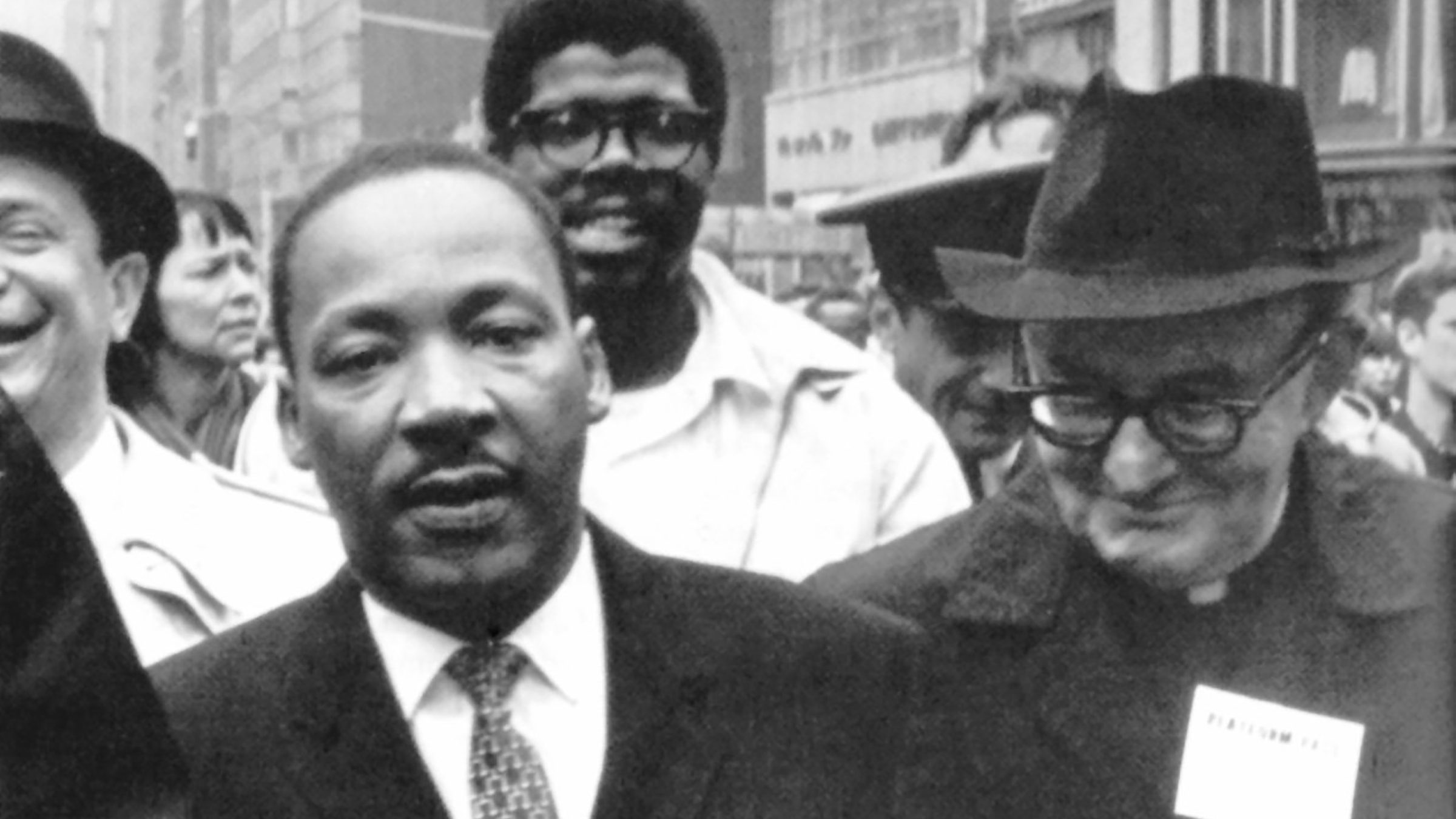

“Has anybody here seen my old friend Martin?” are lyrics from a song entitled Abraham, Martin and John, written by Dick Holler. It is a haunting song recalling the legacies of Abraham Lincoln, Martin Luther King Jr., John F. Kennedy and Robert F. Kennedy, whose lives are associated with the hope for and pursuit of freedom by the oppressed people of their times, and whose lives would be violently ended by assassins because of what they did to secure that freedom. Verses in the song ask if we have seen Abraham, Martin, John and Bobby and where have they gone? It then poses the questions, “Didn’t you love the things that they stood for? Didn’t they try to find some good for you and me?”
Dick Holler wrote the song immediately following the assassination of Senator Robert F. Kennedy, which occurred only two months after Dr. King’s death, while campaigning for the 1968 Democratic Party’s presidential nomination. I vividly remember how Senator Kennedy spoke to a group of African American supporters the day Dr. King was killed. He empathetically recalled the assassination of his brother, John, four years earlier, understanding the anger and frustration the African American community felt that night, but he asked them to remember Dr. King’s legacy of nonviolence in the fight for justice and equality.
Dr. King’s legacy endures and resonates powerfully with anyone who has hope and faith that freedom, justice and equality are possible where there is love. His message and the Civil Rights Movement engaged many Catholics. Dr. King’s work was recognized and appreciated by Catholic popes going back as far as Pope Paul VI, when the Civil Rights leader visited the Vatican in September of 1964, and that pope praised the nonviolent movement Dr. King was leading in America. And Pope Francis remembered Dr. King during his apostolic visit to the United States in September of 2015 in a speech delivered before a joint meeting of Congress.
Pope Francis’s remarks during his visit are worth remembering as we commemorate Dr. King’s birthday this year. In his address to Congress, Pope Francis encouraged the Congress and the American people to continue the political and social heritage of America to pursue the common good, to preserve the dignity of the human person, and to stand in solidarity with the vulnerable. He recalled four “great Americans” who embodied this rich heritage, Abraham Lincoln, Dorothy Day, Thomas Merton and Martin Luther King Jr.
Pope Francis specifically pointed out that 2015 marked the 50th anniversary of the historic voting rights March from Selma to Montgomery, Alabama – a seminal event in the pursuit of the “dream of full civil and political rights for African Americans.” He said America represents “a land of dreams…. Dreams which awaken what is deepest and truest in the life of a people.” The pontiff recalled the promise of the Declaration of Independence “that all men are created equal, that they are endowed by their Creator with certain unalienable rights, that among these are life, liberty and the pursuit of happiness.” And he encouraged Congress to be faithful to the promise of the Declaration of Independence, stressing that “all political activity must serve and promote the good of the human person and be based on respect for his or her dignity.”
As I read Pope Francis’ remarks from 2015, it was clear that he had seen our friend Martin, the inspiration of his dream of freedom, equality and justice, and that Dr. King was a great American who represented the cause of “liberty in plurality and non-exclusion.” In 2025 we marked the 60th anniversary of the March from Selma to Montgomery and the enactment of the Voting Rights Act of 1965. Sadly, we are facing new political and social storms resulting in aggressive legal challenges to the hard earned protections of the Voting Rights Act of 1965.
This year our nation will celebrate the 250th anniversary of its founding and liberation from oppression and tyranny of the British crown that sparked the American Revolution – and gave birth to the promise of equality and “life, liberty and the pursuit of happiness.” In his “I Have A Dream” speech delivered on the steps of the Lincoln Memorial in 1963, Dr. King referred to this promise as a “promissory note” that had been long overdue for African Americans and other politically marginalized and oppressed people.
A promissory note is only as good as the guarantors of the promise. Guarantors are people who stand behind the promise, to ensure that it is honored. As for this promise of equality and “life, liberty and the pursuit of happiness,” the guarantors must stand in solidarity with all citizens who pursue the promise. And it is we the people who are the guarantors of the promise.
Dr. King said while the promise was overdue, he did not believe the “bank of justice [was] bankrupt.” It is still time to honor the promise and to remember the dream of our old friend Martin.
(Veryl V. Miles serves as special assistant to the president of The Catholic University of America and as a full-time faculty member in CUA’s Columbus School of Law.)