
Mass readings for Sunday, Sept. 13:
Sirach 27:30—28:7
Psalm 103:1-2, 3-4, 9-10, 11-12
Romans 14:7-9
Matthew 18:21-35
How much is enough?
This Sunday’s Gospel begins with Peter asking that question, but with a very specific idea in mind. How much do I have to forgive my brother? How many times? Seven? That should be enough, right? Right?
But what followed probably wasn’t what Peter expected. “Jesus answered, ‘I say to you, not seven times but seventy-seven times.”
He went on to explain with a parable about a forgiving king and an unforgiving servant, a man who paid a price – torture for being merciless. “So will my heavenly Father do to you,” Jesus concluded, “unless each of you forgives your brother from your heart.”
That may have hit a lot of his listeners hard. It should still hit us that way, too. We live in a time when it is easy – even socially acceptable – to harbor grudges, to want revenge, to seek retribution for grievances or slights. Let’s be honest: Nothing is more common, accepted or satisfying than payback.
But right here, in Matthew’s Gospel, we encounter a hard lesson in humility, in grace, in striving to follow the example of our merciful Father. A lot of us may be trying to “love one another as I have loved you” – the very words we hear in the verse before the Gospel – but how often do we fall short?
How often do we let bitterness, jealousy or spite get the better of us and refuse to let it go? We are human. We struggle. We fail. Forgiveness isn’t easy.
But so much is at stake.
Earlier in Matthew’s Gospel, Jesus laid it on the line when he taught his apostles how to pray, with this familiar plea: “Forgive us our trespasses, as we forgive those who trespass against us.” (Matthew 6).
We speak those words so often that, maybe, they don’t quite sink in. But this Sunday, let them sink in. Do we realize what we are saying?
This Gospel helps define what we need to do, and why. It challenges us to do something difficult, even painful. It teaches us this: remember that loving our neighbor is more than an act of kindness or a gesture of generosity. It’s about more than visiting an elderly neighbor or adding an extra dollar or two to the collection basket for CRS.
It means letting go of hate. It means sacrificing our own pride and embracing humility. When a relationship becomes tangled by bitterness, grievances and hurt, it means doing something we might find unthinkable.
It means starting over. Beginning again. Trying to heal a deep and lasting wound.
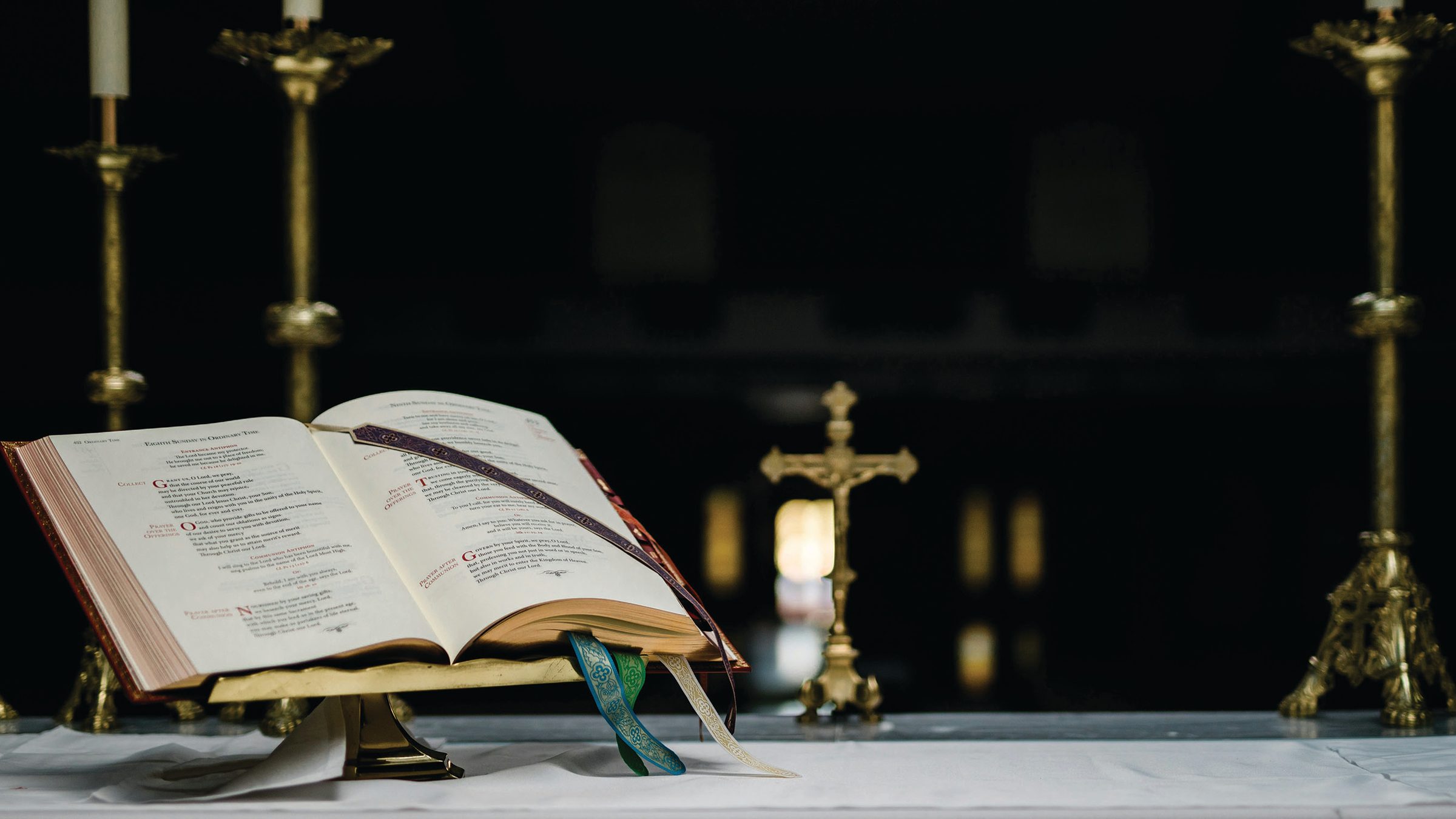
It’s tougher than it sounds. But if we find ourselves discomforted by these words when we hear them proclaimed from the pulpit during Mass – “not seven times, but seventy-seven times” – maybe we need to let our eyes turn toward the sanctuary, and the man hanging on the cross.
In his last moments, Christ had the strength to pray, “Father, forgive them.” Could any of us summon that kind of mercy?
Jesus did it then, under the most savage circumstances imaginable. What about us? How do we respond to some spiteful gossip, a thoughtless comment, some backstabbing at the water cooler? How do we live with petty cruelty and indifference, or someone who just doesn’t hold up his end of a bargain?
When I hear this Gospel, my memory automatically goes to the translation I heard in my youth, which said you don’t forgive seven times, but 70 times seven.
That makes it even harder.
Looked at another way: this Gospel tells us we shouldn’t engage in division or subtraction; work, instead, on multiplication. Not seven but 70 times seven.
The lesson here? Do the math. Pray. Then do the hardest thing of all. Forgive.
Deacon Greg Kandra is an award-winning author and journalist, and creator of the blog “The Deacon’s Bench.”