
Even if Pope Leo XIV’s Thanksgiving trip to Turkey and Lebanon began with lighthearted moments – receiving pumpkin pies and White Sox trinkets from the Vatican press corps – the journey itself was anything but casual.
In fact, Pope Leo left the Vatican on Nov. 27 as Bishop of Rome. By the time he touched back down on Italian soil Dec. 2, he had emerged unmistakably as Pontifex – the bridge-builder.
In a 25-minute news conference with reporters on the return flight from Lebanon – a practice from previous pontificates that we are happy to see continue – Pope Leo shared that crowds have been flocking to see him during his travels, and also at the Vatican, “because they want to see Jesus Christ, and they want to see a messenger of peace.”
And this is precisely what he was throughout the trip: a messenger of peace and unity in a region torn by war.
In Turkey, Leo avoided calling out perpetrators, but he stood firmly before world leaders as a moral authority – a voice of faith, reason and reconciliation. Addressing Turkish officials, including those key to Israeli-Palestinian peace efforts, he warned: “The future of humanity is at stake.”
In the presence of government leaders and diplomats he added, “Today, more than ever, we need people who will promote dialogue and practice it with firm will and patient resolve.” He later urged the small Catholic community there to live in peace and tolerance in a world “where religion is too often used to justify wars and atrocities.”
In Lebanon, addressing a nation exhausted by conflict, he pleaded: “Be artisans of peace. Heralds of peace. Witnesses of peace!” He insisted the Middle East must “reject the mindset of revenge and violence,” overcome its divisions, and “open new chapters in the name of reconciliation and peace,” urging a “change of course.”
“We need to educate our hearts for peace,” he said – words that complemented his message from Turkey, where he said that peace “is not merely the fruit of human effort, but is a gift from God.” True peace, he emphasized, must be sought through “prayer, penance, contemplation and nurturing a living relationship with the Lord.”
Pope Leo’s episcopal motto – “In Illo uno unum,” or “In the One, we are one” – also surfaced in his push for Christian unity. In a striking moment on Nov. 28, Pope Leo, Ecumenical Patriarch Bartholomew I, and other Christian leaders stood above the archaeological remains of the Church where the Council of Nicaea met and recited the Nicene Creed together.
“Today, the whole of humanity afflicted by violence and conflict is crying out for reconciliation,” the pope said. “The desire for full communion among all believers in Jesus Christ is always accompanied by the search for fraternity among all human beings.”
He reminded Christian leaders that the Creed is “of fundamental importance in the journey that Christians are making toward full communion,” and expressed hope that they might celebrate the 2033 Jubilee together in the Cenacle.
Returning to Rome, his message remained universal: if we “leave aside the distrust, the hatred, the animosity that has so often been built up,” he said during the in-flight news conference, “we will find ways to come together and be able to promote authentic peace and justice.”
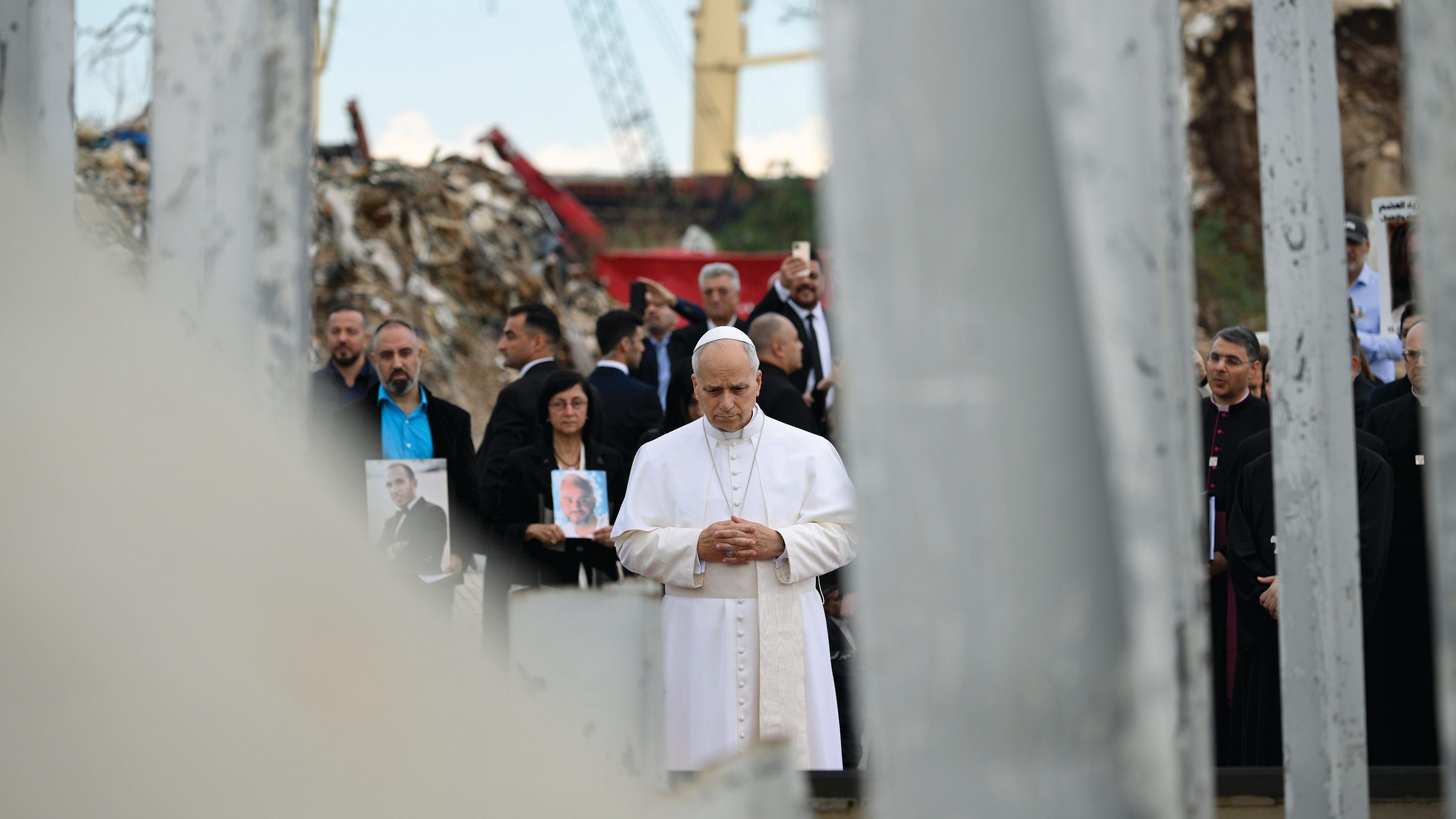
In the end, Pope Leo’s first journey abroad made one truth unmistakably clear: a Pontifex does not merely speak of bridges, he builds them. By embracing families still seeking justice after the 2020 Beirut port blast. By holding the hand of a little boy in a wheelchair during prayer in Turkey. And – in the bigger picture – by choosing a complicated region for his first papal trip instead of an enthusiastic homecoming in the United States or South America.
In a region aching for reconciliation, Pope Leo left behind sturdy foundations on which a more peaceful future may yet rise, inviting others to cross that bridge with him. And, as one OSV News reader observed, he is only just spreading his wings.