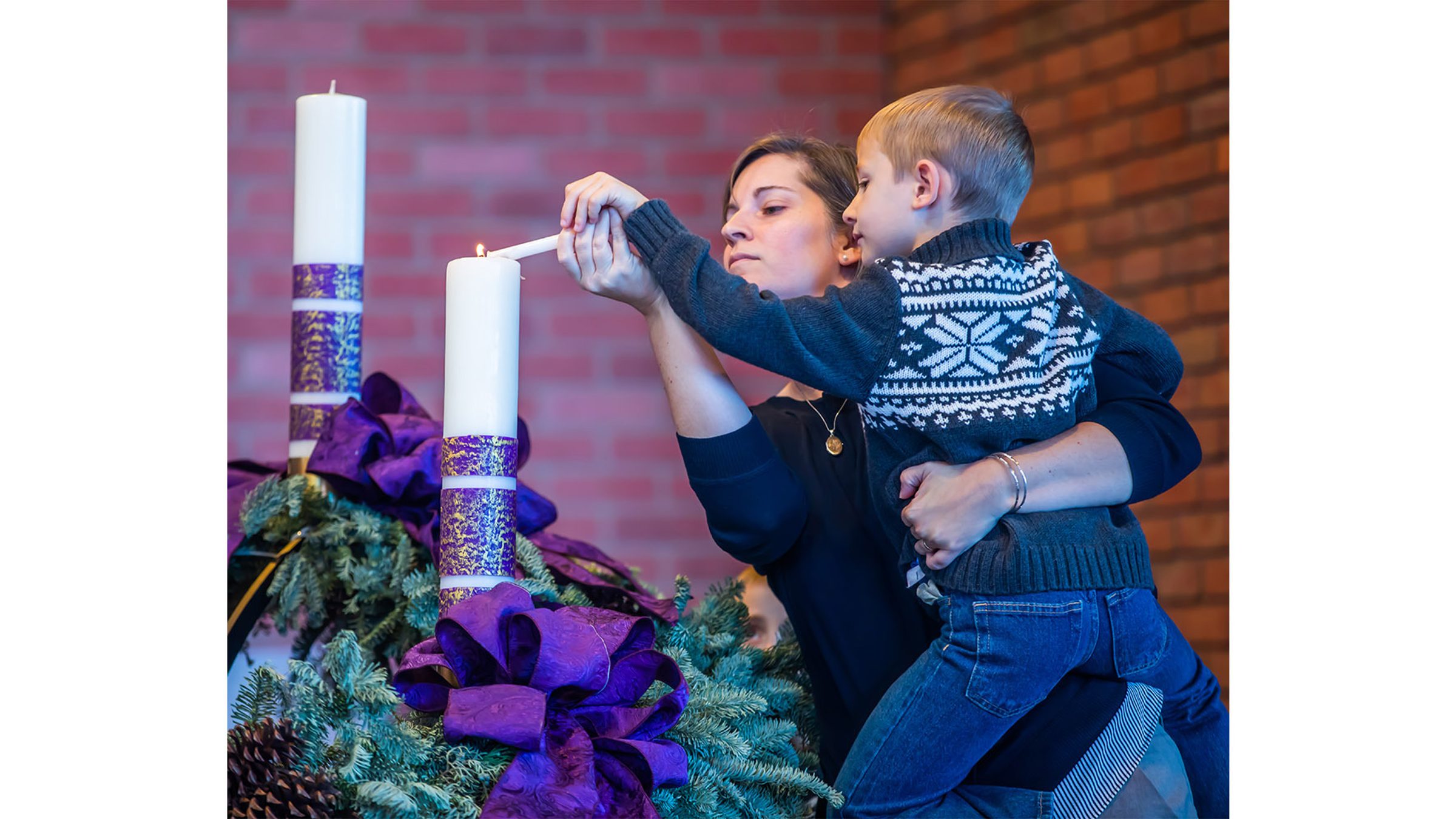

Advent is a season of expectation. In the liturgy of these weeks, a recurrent theme is God’s closeness to humanity. The Old Testament prophets, especially Isaiah, spoke to a people in darkness and communally depressed, kindling hope that God would come near to save them.
“Behold, a virgin shall conceive and bear a son, and his name shall be called Emmanuel,” a name meaning “God-with-us,” an angel said to Joseph, quoting Isaiah (Matthew 1:23; cf. Isaiah 7:14). In other words, God would not remain distant; He would be intimately with His people. This promise of Emmanuel told Israel that their longing for salvation was not in vain. Through exile, oppression, and every trial, the prophets kept alive the vision of a God who desired to be present among His children.
Isaiah paints vivid pictures of the peace and justice that God’s coming would bring. He foretells a time when “They shall beat their swords into plowshares… One nation shall not raise the sword against another” (Isaiah 2:4). War and violence will cease because God’s reign will be one of true peace. Elsewhere Isaiah insists, “Here is your God. He comes to save you” (Isaiah 35:4), reassuring the downtrodden that God himself is on the way. Each prophetic oracle stoked the flames of yearning in people’s hearts: O Come, O God, be near to us! In Advent, we make that ancient cry our own, confident that the God of Israel is still a God who draws near.
The beautiful story of Our Lady of Guadalupe is also an expression of that same yearning for the closeness of God. Tradition tells us that in 1531, the Virgin Mary appeared to an indigenous peasant, and recent convert to Catholicism, named Juan Diego on a hill of Tepeyac, in Mexico. The context was an oppressive colonial system in which the native people felt crushed and insignificant. Yet Mary, carrying God’s presence within her, came speaking in Juan Diego’s native language and resembling his own facial features.
She entrusted Juan Diego with a mission to build a church, a “sacred little house” where God’s love could be shown to all. When Juan Diego’s heart was breaking with worry for his dying uncle, Mary offered him tender words of comfort and closeness:
“Am I not here, I who have the honor to be your Mother? Are you not in the hollow of my mantle, in the crossing of my arms?”
Through these gentle questions, Mary assured Juan Diego (and all of us) that God has not abandoned the lowly. Like a loving mother, she conveyed God’s compassion to one who felt helpless. The miraculous image she left on Juan Diego’s tilma, an image of a mestiza Madonna dressed in huipil rich in native symbols, testified that God had drawn near to the indigenous poor of the New World.
Our Lady of Guadalupe remains a powerful sign that God sides with those who are marginalized. Immigrants and the poor today find hope in her words, sensing that the same God who spoke through Mary sees their tears and cradles them in His arms.
Guadalupe’s message is essentially the Advent message: the Almighty has done great things for the humble, lifting up the lowly; God is with us, even when society pushes us aside.
Indeed, as Pope Francis reflected in Angelus remarks during Advent in 2016, “God chose to draw near not in a palace but in the womb of a poor woman from Nazareth. He was born in a stable, visited by working-class shepherds. God’s closeness turns the world’s values upside down, the proud are scattered and the lowly are treasured.” In Mary of Nazareth and in Our Lady of Guadalupe, we see a God who comes so close that He even shares the features and language of the poor. This is the mystery of love we ponder in Advent: a Savior born for all, especially the least among us.
The longing awakened in Advent is not only for personal consolation but for a transformed world. The biblical promise of God’s coming always had social consequences: justice for the oppressed, peace among nations, a new community under God’s reign. We yearn for that world today. As Pope Francis wrote in Fratelli Tutti, “Let us dream… as a single human family… each of us with his or her own voice, brothers and sisters all.” In other words, God’s closeness calls us to imagine the whole world as one loving family, where everyone has a place at the table of friendship and fraternity.
In this holy season, we are invited to experience the closeness of God and to extend that closeness to others. It can be as simple as gathering the family to pray by the Advent wreath. It can be reaching out to someone lonely or suffering, befriending an immigrant family in the neighborhood or in the parish, becoming, like Mary, a sign of God’s love for them. Every such act, however small, answers the Advent call: “Prepare the way of the Lord, make straight his paths.” We prepare His way by opening our hearts and our hands in love.
Our world today yearns for the very things God promises: mercy, justice, presence, peace. In Advent we dare to believe these are not just idealistic words but destined to come true in Jesus. God is close, God is Emmanuel, “God-with-us.” If God is with us, then we are not alone in our struggles, we should not fear.
Advent reminds us that our ultimate hope lies in God’s coming at the end of time. We know no earthly system or leader or pastoral plan can fully bring about the utopia we seek. Perfect justice and universal peace are, in the end, gifts of the Messiah’s reign, realities only fully realized when God is all in all. Yet, far from making us passive, this truth inspires us to work even harder here and now to reflect God’s kingdom.
We might ask, as some do: Are we desiring something unattainable? Pope Francis and, following him, Pope Leo XIV, have challenged us not to dismiss these holy desires as naive. They see such longings as God-given and deeply human, meant to spur our action.
During a recent journey to the Middle East, Pope Leo prayed that the “desire for peace, which comes from God,” would grow in every heart. He affirmed that even now “peace can transform the way you look at others and the way you live together.” He asked for the grace to heal the memory of those personal and collective wounds that require long years and sometimes entire generations to heal. In other words, our yearning for peace, for justice, for coexistence, for belonging is itself a sign of God’s closeness, an invitation to begin living according to His kingdom today.
In the end, the closeness of God is the answer to every longing of the human soul. It is the gift of Advent and the glory of Christmas. God is near, and that changes everything. I wish you all a blessed Advent and Merry Christmas.
(Bishop Evelio Menjivar serves as an auxiliary bishop of the Roman Catholic Archdiocese of Washington.)