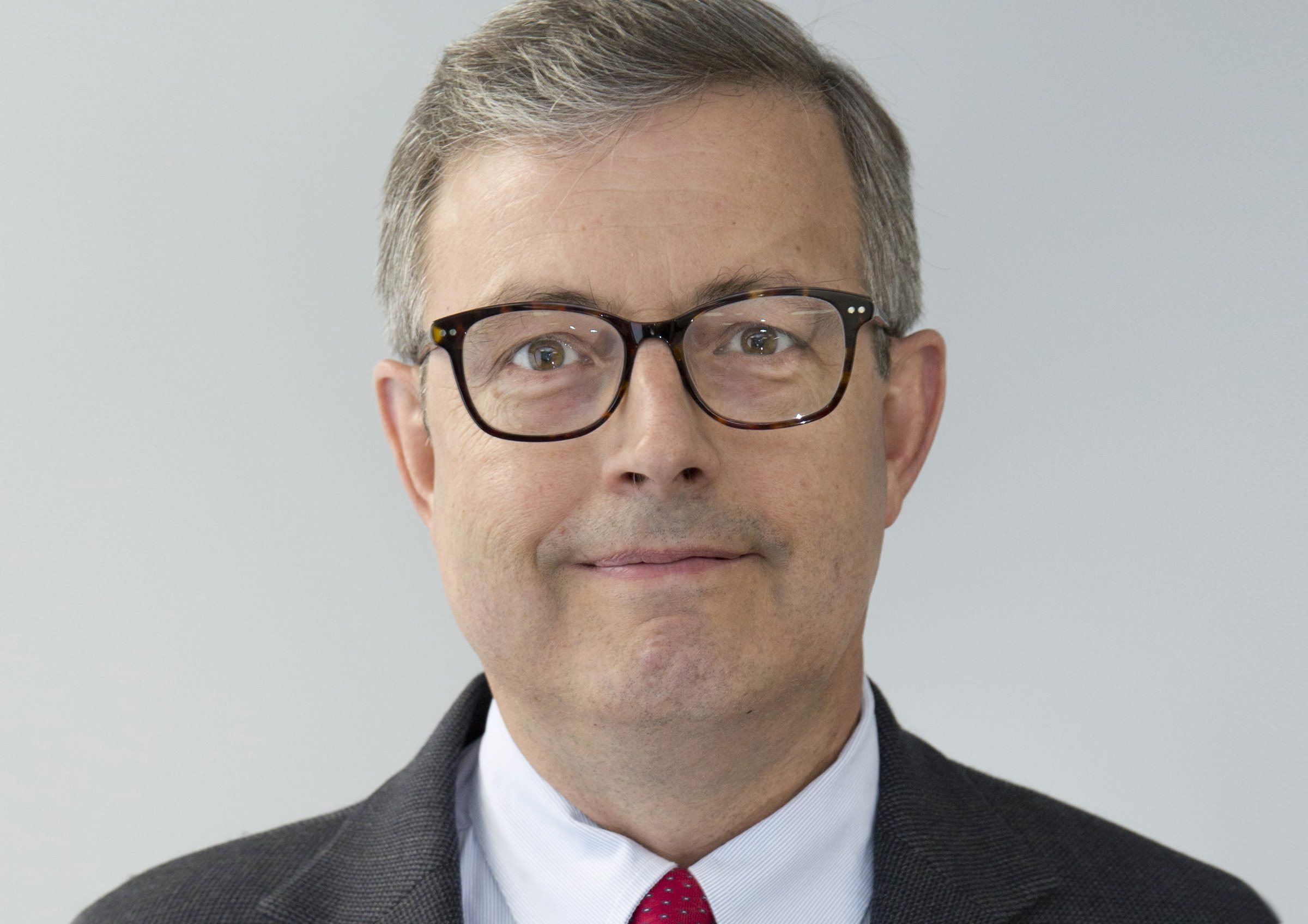


(The following is the text of an interview with Cardinal Wuerl, who responded to questions submitted by Mark Zimmermann, the editor of the Catholic Standard newspaper of the Archdiocese of Washington.)
What impact do you hope your new book, “To the Martyrs,” will have?
Cardinal Wuerl: “For some time now, we have witnessed the persecution of minorities, especially Christians in the Middle East – the birthplace of Christianity – with great violence especially in Iraq and Syria. So much of the world has remained passive or even silent. We watch on the television or read in the newspaper passing stories of Christians being executed, of women being raped and their children sold into sexual slavery and entire villages leveled. ISIS, this newly proclaimed Islamic State, seems intent on nothing less than genocide. And yet, we all have to ask ourselves, where are the voices denouncing this? Where are the voices of congresses and parliaments around the world? Where are the voices on campuses? Where are the voices of community leaders? Where are the voices of talk show hosts and radio programs? Where are the voices of the late night news? Where are the voices of editorial columns? Where are the voices of op-ed pieces? Why a hesitance to call the situation by its proper name – genocide? Why so great a muted response?
“My purpose in writing To the Martyrs was to urge solidarity with today’s persecuted Christians and to remind readers that martyrdom is a recurrent reality throughout Church history. In an ancient understanding of martyrdom, the blood is the seed for the next generation of believers. What, however, are we doing for those persecuted for the faith today?
“There are two reasons why these atrocities continue. Because there are those prepared to commit them and there are those who remain silent. I raise my voice, some others raise theirs and I hope this book, a reflection on the supreme Christian witness, martyrdom, will help others understand the need, today, to recognize that martyrdom continues right here and now in our day and our age.”
After the recent terrorist attacks in Paris and California, many people are feeling fearful, and lawmakers are proposing restrictions against Syrian refugees entering our country. From your perspective, how should our country and our world treat these refugees fleeing civil war in Syria and ISIS persecution in Iraq and Syria?
Cardinal Wuerl: “The United States has always been a haven for people fleeing persecution, atrocities, slaughter and genocide. When I think of the people who are trying to come to our country and who have already suffered enormously simply because they do not accept the ISIS ideology, whether it is the small percentage of Syrian refugees who are Christian, or whether of another faith, I cannot help but sympathize with them.” (Editor’s Note: The United States has allowed just 34 Christians to enter as refugees from Syria since the civil war broke out there more than four years ago, according to the State Department’s most recent available data.)
“Surely our government is capable of both compassion and caution as it welcomes those fleeing the terror of ISIS. There is no way to ensure that every single person who is admitted to our nation or to European nations is totally free from the ISIS ideology of terror. But right now we have no way of assuring that our own citizens who are part of the home-bred terrorism are contained. It is for that reason that I would count on the wisdom, intelligence and capability of our national institutions to exercise both compassion and caution simultaneously in welcoming those who are fleeing genocide. One thing we cannot do is simply leave them to their fate.”
What do you hope will be the outcome of the recent Synod of Bishops on the family?
Cardinal Wuerl: “For two years the Catholic Church has turned its attention with great energy to the challenges facing the family and the extraordinary witness that families bring to the world in an effort to create a stable community of fruitfulness, harmony, peace and solidarity. My hope is that, as more and more people recognize the need to support and sustain family life, we will have a renewed impetus throughout our country. We all recognize that families are the first building block of any society. What we do to strengthen families will strengthen our communities, our culture, our very civilization.”
What do you see as the biggest media or popular misconception about that synod?
Cardinal Wuerl: “Much of the misconception about the Synod was not so much created by the media as it was disseminated by the media, instigated by people who had their own agenda. Thus, we heard that somehow the Synod was being manipulated and that the Pope and a handful of people with him were trying to change Catholic teaching. This, to put it bluntly, was nonsense. What we saw was a number of people inside the Synod who were unhappy that this discussion about a pastoral response to family problems was even taking place. They said so loudly and publicly. And then came a wave of innuendos and half-truths that led to a crescendo of media accounts of this great battle going on inside the Synod.
“At one point I felt obliged to respond to the charges of manipulation. It is simply impossible to manipulate the thinking and voting of over 250 bishops and cardinals from around the world as if they were somehow mindless androids.
“One of the things that struck me was how a few writers, authors and even Synod participants who had fostered this vision of great division and confusion were so quick, when confronted, to profess their great affection and support for Pope Francis. When I heard them, Shakespeare’s line came to mind, ‘Methinks she doth protest too much’ (Hamlet, Act III).”
Of course, the story of the year for Catholics in Washington was Pope Francis’ visit to our nation’s capital. You were in the gallery as Pope Francis became the first pontiff to address a joint meeting of Congress. What message from his speech do you hope will resonate the most with our nation’s legislators?
Cardinal Wuerl: “I think everyone agrees that the Holy Father’s speech to the joint meeting of Congress was stellar. He called us to our own basic principles and to our own best self. My hope is that his message will continue to resonate in the hearts of our legislators. He called for solidarity, for human compassion, for turning our attention away from ourselves and onto the needs of people, our fellow citizens and brothers and sisters in this land. I hope we are not too quick to forget the unity in Congress surrounding our Holy Father and the general acceptance around our country of what he had to say.”
Then immediately after addressing Congress, Pope Francis met with clients of Catholic Charities here in Washington. What was the pope saying by that gesture?
Cardinal Wuerl: “It was striking that the Holy Father left the halls of supreme political power in our nation, a country that boasts enormous wealth and commitment to equality, and went a few blocks’ distance to . He entered Saint Patrick’s Church and was greeted by a building filled with people who normally depend on our shelters for a place to spend the night. The street people, the homeless, the needy were there en masse. And Pope Francis embraced them with a care and love that was clearly evident. He then, after speaking to them, went out into the street in front of Catholic Charities’ headquarters adjacent to Saint Patrick’s Church and met with the people who were being fed – those who regularly come to Catholic Charities’ Saint Maria’s Meals for something to eat. Here again we saw the Pope embracing all of these people with spiritual and material mercy, both feeding and consoling the hungry, the homeless, the powerless, and saying to all of us, we all need to embrace the least fortunate among us.
“The contrast speaks for itself – the wealth, power and concentration of political will in the capitol of the United States and the poverty, suffering and need right next door.”
The Walk with Francis effort to inspire people to pray, serve and take action in the spirit of Pope Francis was a great success. How do you hope that Catholics of the Archdiocese of Washington will continue to “walk with Francis” in 2016?
Cardinal Wuerl: “So successful was the Walk with Francis project – at last count about 110,000 individuals formally committed to do something for someone in need – that I believe we must continue, in some way or another, to keep that spirit of compassion alive. It has to an extent been incorporated into our archdiocesan #EncounterMercy initiative for this Jubilee Year of Faith to help people discover ways to share mercy to those in need. There is also discussion about reenergizing the Walk with Francis campaign in a particular way on the anniversary of his visit. Would it not be wonderful if we could institutionalize such a unified effort at prayer, outreach and action involving care for the most needy among us?”
The other main event of Pope Francis’ visit to Washington was his canonization Mass for St. Junípero Serra outside the Basilica of the National Shrine of the Immaculate Conception. What can today’s Catholics learn from this newly canonized saint?
Cardinal Wuerl: “For me, a personal highlight was, of course, to be able to stand before the altar on the East Portico of the Basilica and ask Pope Francis, the first Pope from our hemisphere, to have a canonization for the first time in the history of the United States, and to do so for a saint that evangelized a portion of what is now our nation. Of the many pictures that are souvenirs of the Pope’s visit beginning with the Tuesday arrival on through his Thursday evening departure, one that I particularly cherish and have already framed in my study is that moment. The lesson for all of us is that, in the words of the Holy Father, we are heirs to a bold missionary spirit, and like Saint Junípero, we are all called to share the Good News of our faith. As Catholics blessed with the gift of our faith, we must never forget our obligation to bring that Good News to those around us.”
The Year of Mercy began with Masses on the Solemnity of the Immaculate Conception and the opening of the Holy Doors at St. Matthew’s Cathedral and the National Shrine. How can our Catholics, both as individuals and family members, open their hearts and their lives to mercy in this year?
Cardinal Wuerl: “The Jubilee Year of Mercy calls us to recognize, first of all, that God’s love and mercy are always and immediately available to us. As Pope Francis has so beautifully said, ‘God never tires of forgiving us…we get tired of asking forgiveness.’
“My hope is that the Year of Mercy will be a time when we all concentrate on availing ourselves of God’s loving compassion and all-embracing mercy and at the same time take to heart the call of Jesus that we forgive as we are forgiven. Can you imagine what our community would be like, what our nation would be like, what the world would be like if compassion, forgiveness, mercy and understanding replaced bigotry, ideology, violence and self-serving? Lingering grudges and anger burdens and harms the person who hangs on to them probably more than those they are directed toward. Imagine if we all simply put down the resentments that we carry, if we could all let go of bitterness and patiently let annoyances pass by. We could all be a lot happier and make reconciliation easier. It is like the school boys who get in a fight and are made to shake hands, and then the next day they are friends.
“The Year of Mercy is a reminder by Pope Francis to all of us that it is possible to build a truly good and just society and to do so in a spirit of compassion, mercy, forgiveness and love.”
On a lighter note, what was it like to ride in the Popemobile?
Cardinal Wuerl: “An awesome experience! To be in that seat behind our Holy Father and see the faces of tens of thousands of people and to hear the roar of their voices as they greeted the Pope is something I will never forget. Clearly Pope Francis has touched the hearts and the imagination of people everywhere. But from the Popemobile you could see another dimension – the joy he brings to people and the hope that lights up faces as they look to him. Anytime I find myself facing particularly difficult issues, moments or problems, I like to think back to those moments in the Popemobile and recognize the joy of the Gospel – the joy of the message – the joy of the person of Pope Francis.”