Catholic Standard El Pregonero
Classifieds Buy Photos

Cardinal blesses plaque at Sacred Heart Church honoring legacy of the enslaved at the Jesuits’ former White Marsh Plantation

During a Mass at Sacred Heart Church in Bowie, Maryland, on Nov. 15, 2026, Washington Cardinal Robert W. McElroy blesses a plaque there to honor and remember those who were enslaved at the Jesuits’ White Marsh Plantation. Sacred Heart Church and its historic chapel and cemetery are located on part of what had been that plantation, where the enslaved lived, worked and died in the 1700s and 1800s before Emancipation. The Mass was offered to pray for all those who were enslaved at the White Marsh Plantation. (Catholic Standard photo by Mihoko Owada)

Despite the darkness of slavery, enslaved men, women and children remained as “children of the light,” rooted in God’s love and passing their faith on to generations of their families, Washington Cardinal Robert W. McElroy said at a special Mass on Nov. 15, 2026 at Sacred Heart Church in Bowie, Maryland, where prayers were offered and a plaque was blessed to honor the enslaved who lived, worked and died at the Jesuits’ White Marsh Plantation in that area in the 1700s and 1800s before Emancipation.

“These men and women, children and families, they were truly children of the light,” the cardinal said in his homily, emphasizing that their faith sustained them, and they held onto their faith and handed it on to their families, from one generation to the next.

Hundreds of people attended the Mass, joined by descendants whose ancestors were enslaved at the White Marsh Plantation and at six other Jesuit missions in Maryland during Colonial times and in the first decades of the new United States of America. The present-day Sacred Heart Church and its historic chapel and cemetery are located on part of the grounds of what was the White Marsh Plantation.

In 1838, the Maryland Jesuits signed an article of agreement to sell 272 enslaved men, women and children to two sugar plantation owners in Louisiana, a sale that helped ensure the financial survival of Georgetown College, now Georgetown University.

In recent years, archaeological surveys on the Sacred Heart cemetery’s hillside have uncovered what are believed to be the unmarked graves of hundreds of enslaved people who toiled at the White Marsh Plantation.

After the Mass, descendants and Sacred Heart parishioners joined Catholic leaders and state officials at a ceremony where a citation from Maryland Governor Wes Moore was read honoring the GU272 and their legacy. (Related story to come on the Catholic Standard website.)
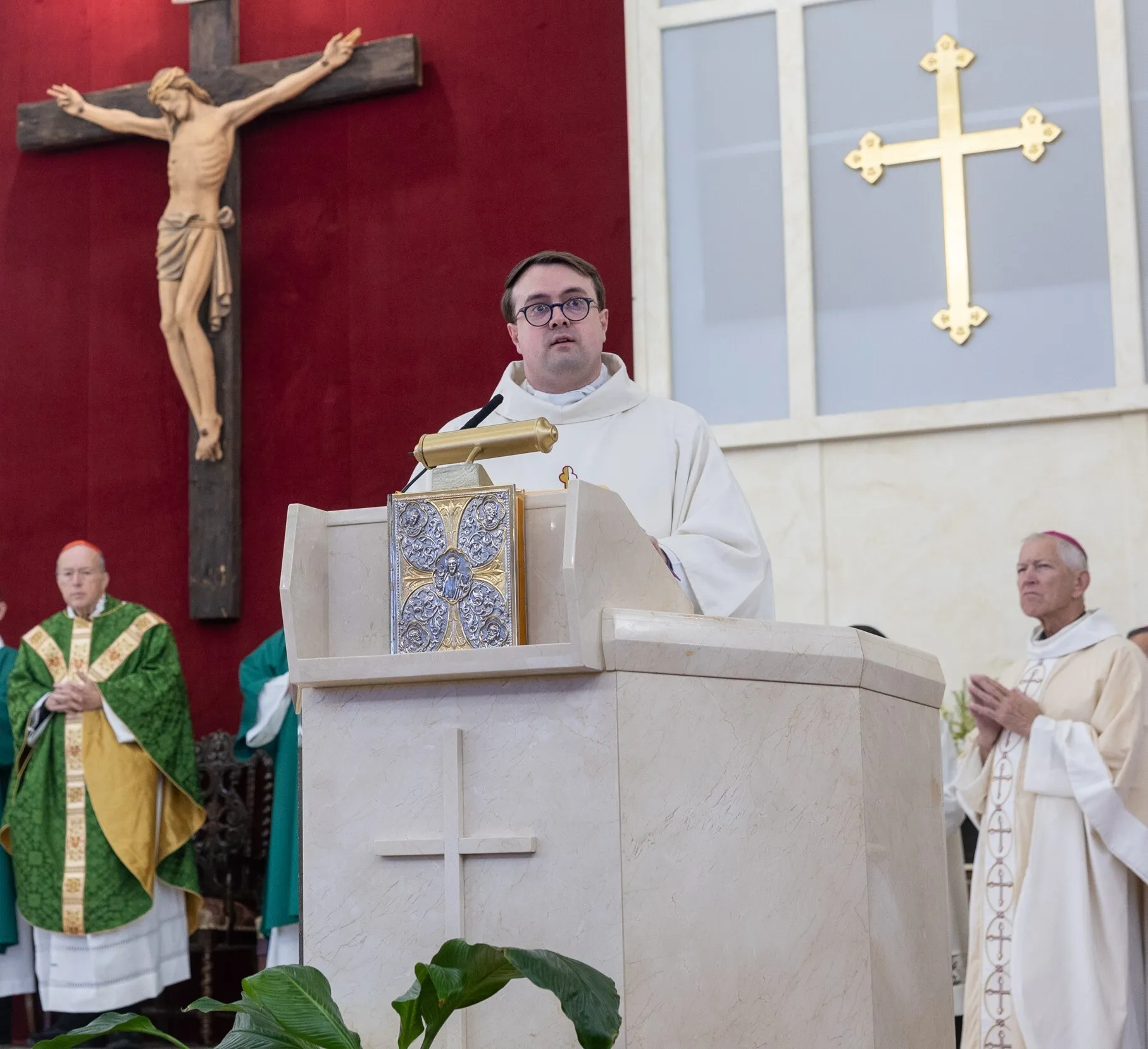
Father Michael A. Russo, the pastor of Sacred Heart Parish in Bowie, Maryland, speaks at the beginning of a Mass celebrated by Washington Cardinal Robert W. McElroy on Nov. 15, 2026 that was offered to pray for all those who were enslaved at the Jesuits’ White Marsh Plantation in that area during the 1700s and 1800s before Emancipation. During the Mass, Cardinal McElroy (at left) blessed a plaque in the church to honor and remember those who were enslaved at White Marsh. The concelebrants at the Mass included Washington Auxiliary Bishop Gary R. Studniewski (at right). (Catholic Standard photo by Mihoko Owada)

Welcoming people to the Mass, Father Michael Russo, Sacred Heart’s pastor, noted that parish community has been “committed to the work of mercy of caring for our brothers and sisters buried here on our parish grounds.”

“After many years of neglect of the grounds and by some the history, we now have a much greater and deepening appreciation of the full history and memory of Sacred Heart and what was the White Marsh Plantation,” Father Russo said.

He noted that for the first time, Sacred Heart Parish on that day was “offering this Mass for all those who were enslaved on the White Marsh Plantation, those whose names we know, and those whose names are known only to God.”

The priest promised that the parish would offer an annual Mass honoring them in the month of November when All Saints Day, All Souls Day and Black Catholic History Month are commemorated.

The concelebrants at the Mass included Bishop Roy Campbell Jr., a retired Washington auxiliary bishop who continues as the pastor of St. Joseph Parish in Largo, Maryland. He has led the Roman Catholic Archdiocese of Washington’s initiative, “Honoring Those Who Were Enslaved: Do Justice, Love Goodness and Walk Humbly,” which has an action plan that includes providing access to sacramental and other records to assist descendants of the enslaved in discovering their family history, and funding a public monument to commemorate contributions of enslaved peoples to the Catholic Church in Maryland.

In addition to Father Russo, other concelebrants at the Mass included Washington Auxiliary Bishop Gary R. Studniewski; Jesuit Father William Campbell, the rector of the Georgetown Jesuit Community; Jesuit Father Sam Sawyer, the editor in chief of America magazine; and Father Nathaniel Roberts, a parochial vicar at Sacred Heart Parish.

The descendants attending the Mass included Kevin Porter, the president and founder of the White Marsh Historical Society.
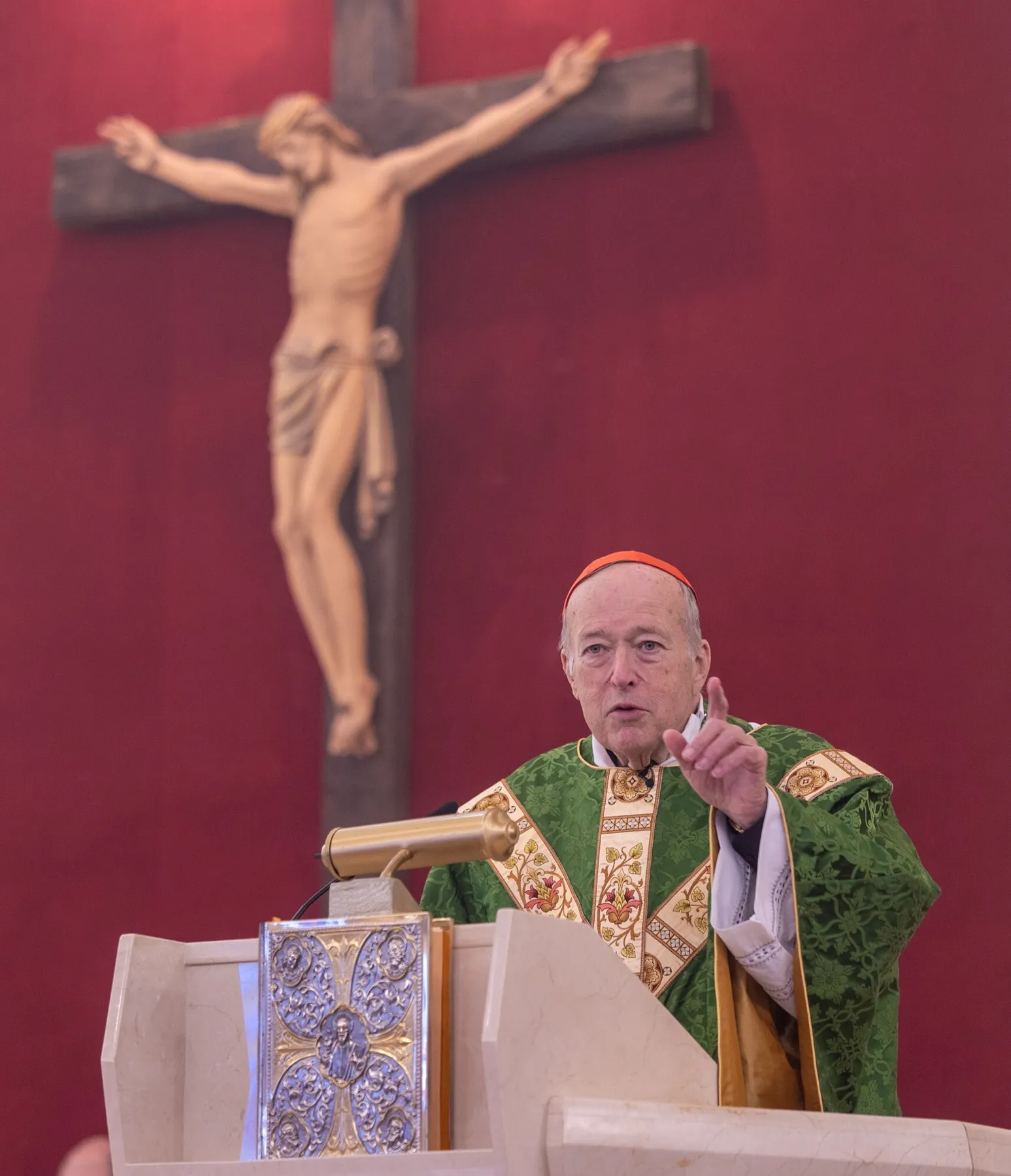
Washington Cardinal Robert W. McElroy gives the homily during a Mass on Nov. 15, 2026 at Sacred Heart Church in Bowie, Maryland that was offered to pray for all those who were enslaved at the Jesuits’ White Marsh Plantation in that area during the 1700s and 1800s before Emancipation. Later during the Mass, Cardinal McElroy blessed a plaque in the church to honor and remember those who were enslaved at White Marsh. (Catholic Standard photo by Mihoko Owada)

In his homily, Cardinal McElroy – who was making his first visit to Sacred Heart Church – emphasized how in the second reading at that day’s Mass, St. Paul in his letter to the Thessalonians was calling on all followers of Christ to “live as children of the light.”

But he noted how the history of the White Marsh Plantation and the experience of the enslaved there was marked by darkness and light, as those people endured the horror of slavery, which involved human beings being owned and “restricting their rights in so many ways, restricting their family life and breaking up families, restricting the right to education, to basic learning, to freedom of movement.”

Cardinal McElroy emphasized that “the darkness of slavery is one of the great sins of our nation, I think the greatest sin of our nation,” and he said the Catholic Church and the Society of Jesus are called to ask for forgiveness for complicity with the institution of slavery.

Pope Leo XIV in his recent encyclical letter Magnifica Humanitas asked for pardon in the name of the Church for its historic involvement with slavery and slowness to condemn that evil.

The cardinal noted that while enduring the darkness of slavery, the enslaved men, women, children and families remained “truly children of the light.”

“Think how hard it was to continue family life, to find joys, to keep faith, to carry out the community and the relationships with one another in this terrible situation of oppression,” he said.

People listen to the homily given by Washington Cardinal Robert W. McElroy during a Mass on Nov. 15, 2026 at Sacred Heart Church in Bowie, Maryland that was offered to pray for all those who were enslaved at the Jesuits’ White Marsh Plantation in that area during the 1700s and 1800s before Emancipation. Later during the Mass, Cardinal McElroy blessed a plaque in the church to honor and remember those who were enslaved at White Marsh. (Catholic Standard photos by Mihoko Owada)

Noting that the plaque honoring the enslaved at White Marsh was being blessed that day to honor them, Cardinal McElroy said that was being done to affirm that in that place where they endured so much suffering, “their identity, their history has not been extinguished, but it lives on in the lives of their descendants. And we want to say in the Church, it lives on in our affirming that despite the terrible conditions of slavery… their identity for us is not extinguished here in this place where so many are buried.”

Concluding his homily, the cardinal said, “So let us continue as children of the light, rooted in the love of God, the forgiveness of God, the compassion of God, having God as that one thing that leads us onward in life and keeps our compass balanced and clear. And just remember on this particular day that despite the horrors of slavery, which were barbarous and overwhelming, we honor today the men and women and children of families who kept their identity as children of the light, and we honor that identity this day.”
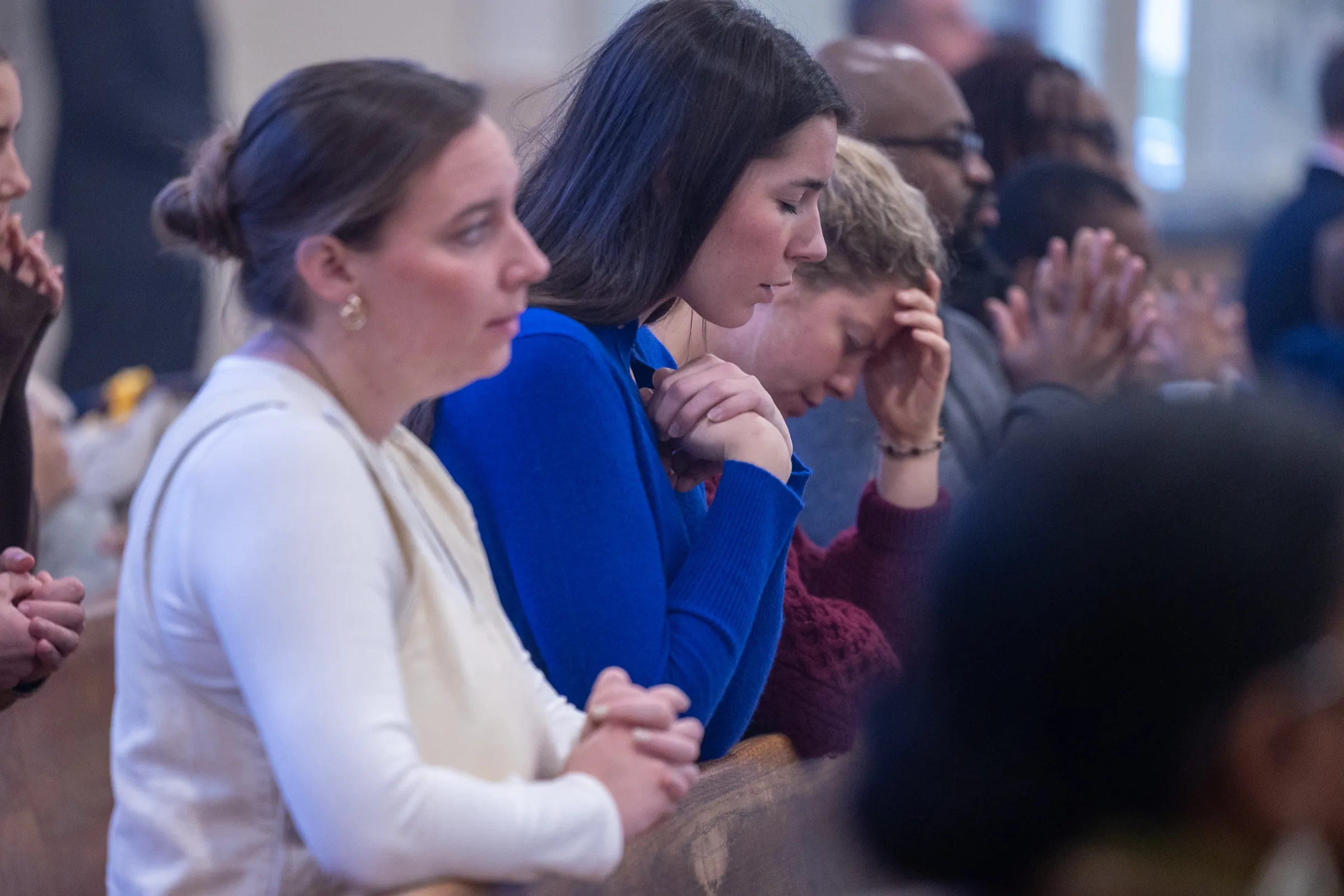
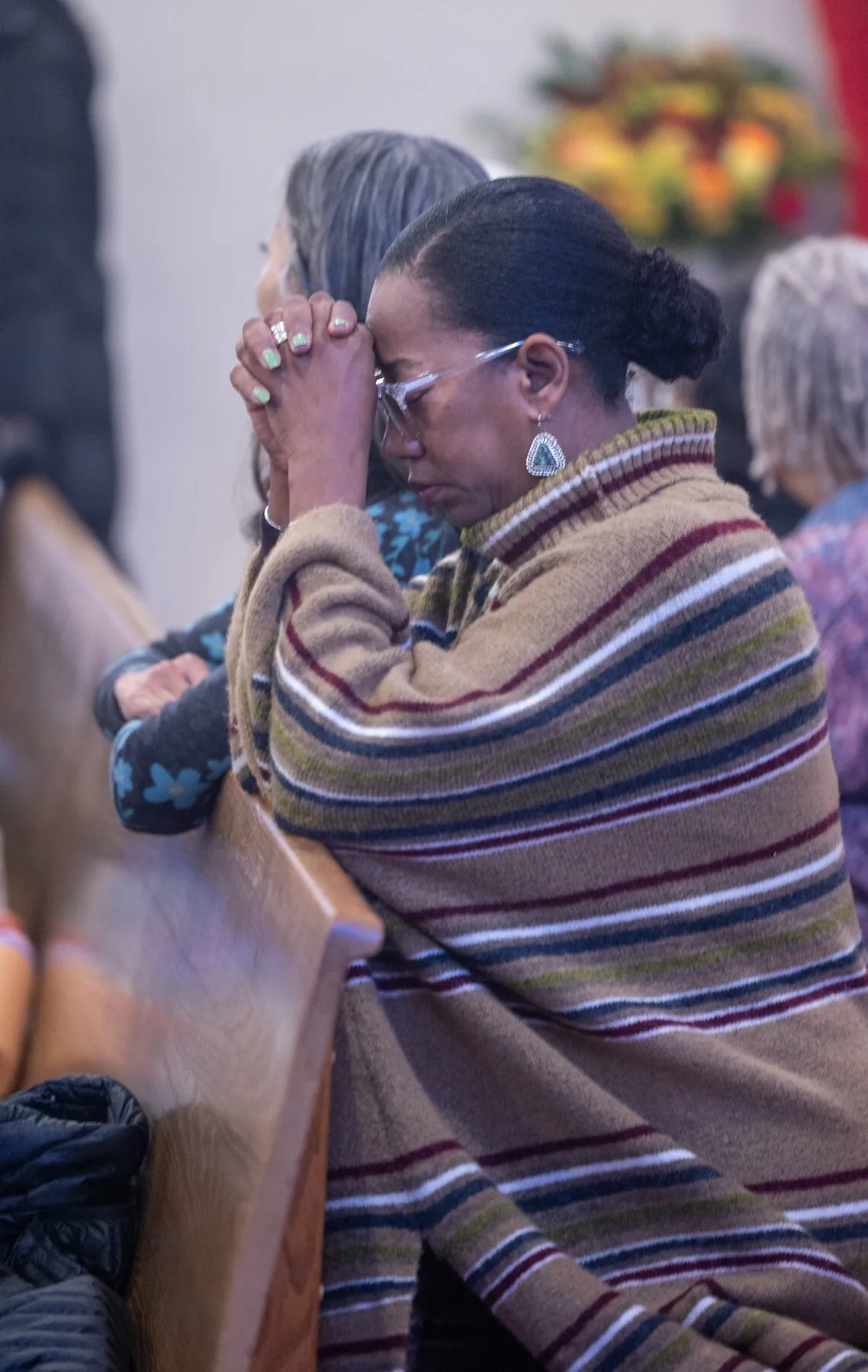
People pray during a Mass on Nov. 15, 2026 at Sacred Heart Church in Bowie, Maryland, that was offered to pray for all those who were enslaved at the Jesuits’ White Marsh Plantation in that area during the 1700s and 1800s before Emancipation. During the Mass, Cardinal McElroy blessed a plaque in the church to honor and remember those who were enslaved at White Marsh. (Catholic Standard photos by Mihoko Owada)

Moments later, a prayer at the Mass was offered “for the men, women and children who were enslaved at White Marsh and whose labor and suffering are part of our history and whose names are known fully only to God, that they may rest in the light of Christ’s mercy.”
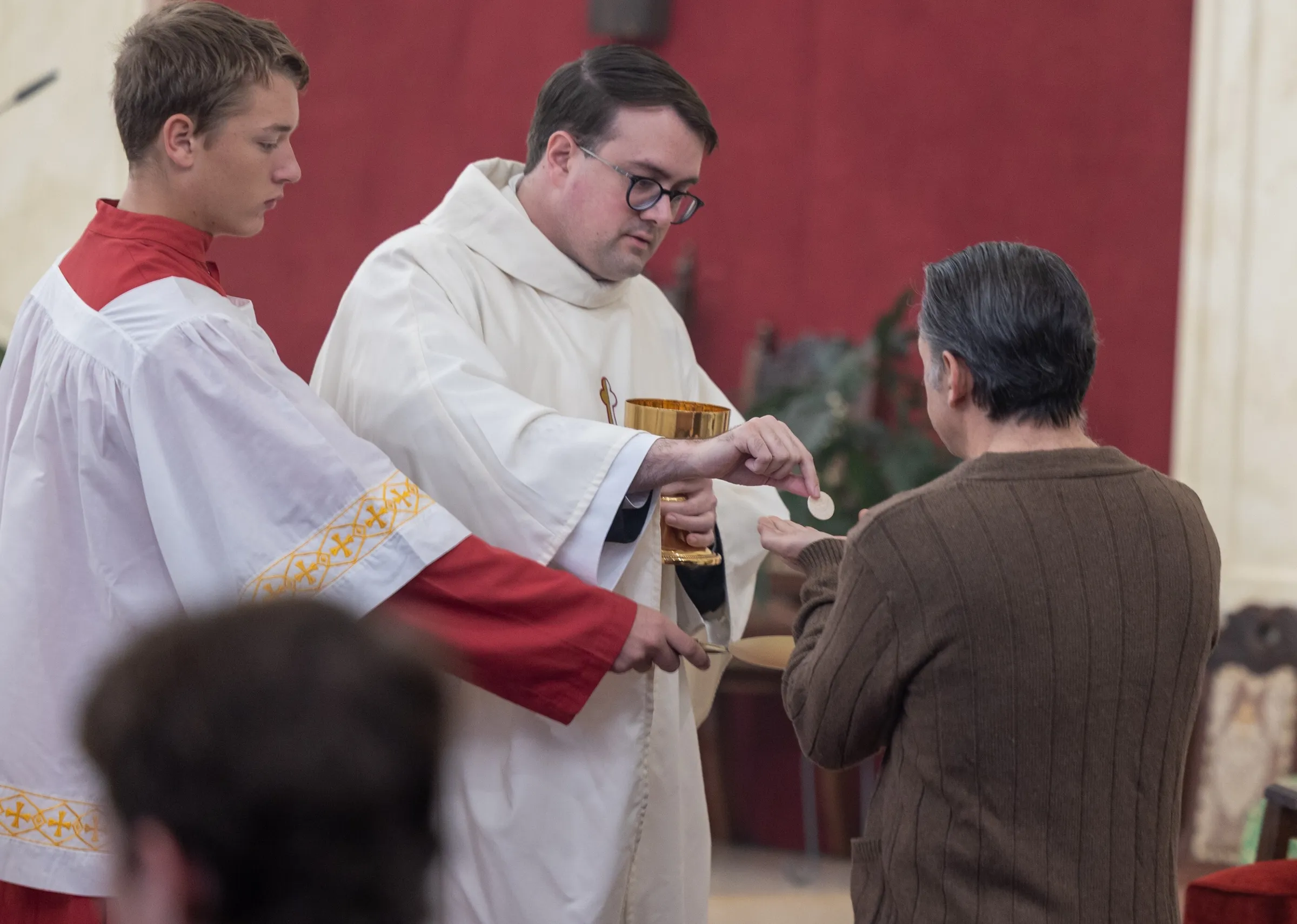
Father Michael Russo, the pastor of Sacred Heart Parish in Bowie, Maryland, gives Communion to a man during a Mass on Nov. 15, 2026 at Sacred Heart Church that was offered to pray for all those who were enslaved at the Jesuits’ White Marsh Plantation in that area during the 1700s and 1800s before Emancipation. Later during the Mass, Cardinal McElroy blessed a plaque in the church to honor and remember those who were enslaved at White Marsh. (Catholic Standard photos by Mihoko Owada)

In remarks after Communion, Father Russo noted that Sacred Heart Church for many years has had a memorial to the Jesuits who lived, ministered and studied in that area, where the Jesuit missions in Maryland were headquartered for many years. At the site of the Sacred Heart Chapel, John Carroll was elected as the bishop of Baltimore in 1789, becoming the first Catholic bishop of the United States, and Georgetown College was planned.

Sacred Heart’s pastor said that as they gained a fuller knowledge of the story of what happened at White Marsh, the parish’s Cemetery Committee worked with the White Marsh Historical Society to put a plaque next to the Jesuit memorial in the church “to honor those men and women and children who were held in bondage here.”

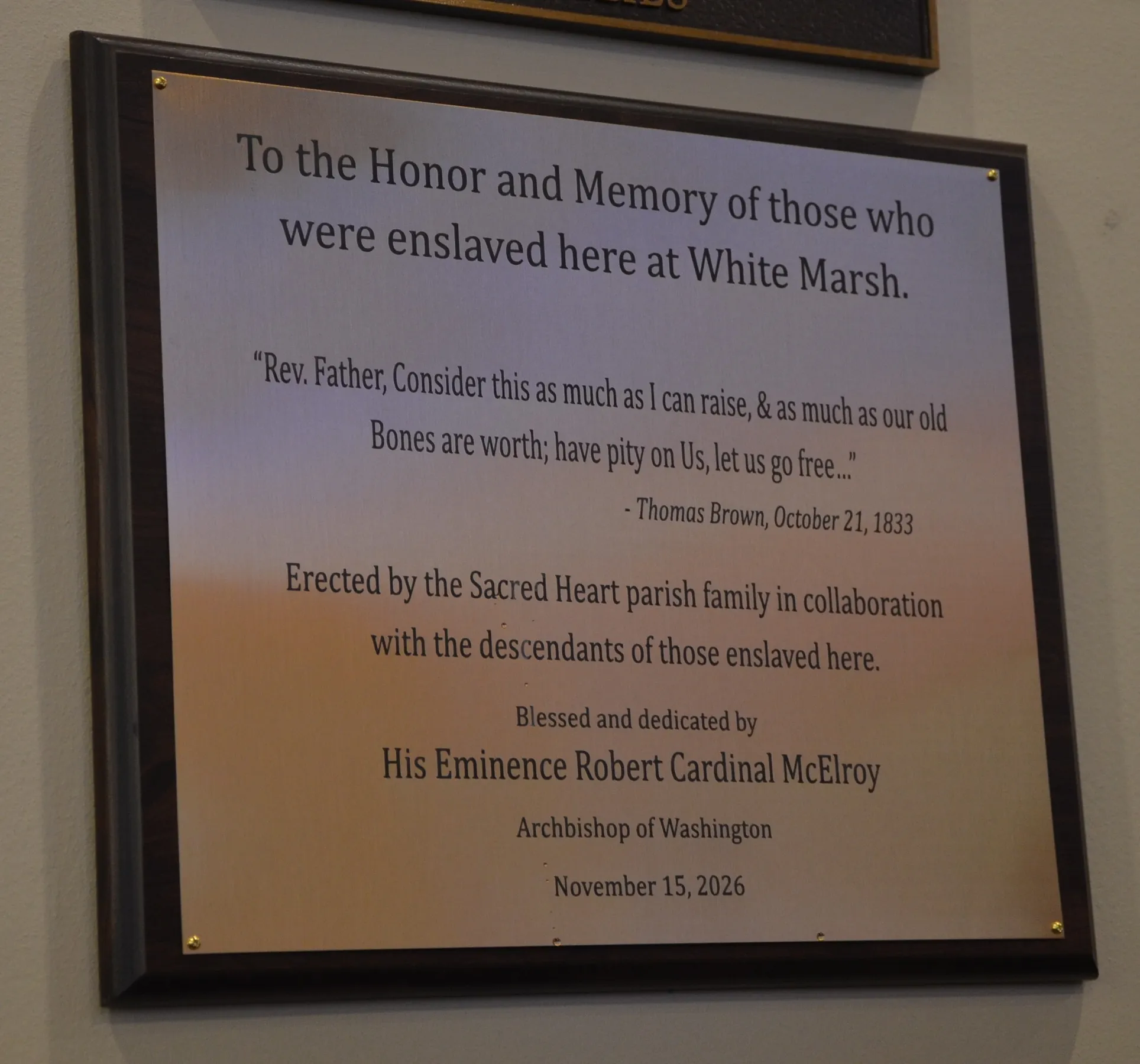
The center of the plaque includes an 1833 plea for freedom to one of the Jesuit fathers by Thomas Brown, a man enslaved at White Marsh who was forcibly moved to St. Louis by the Jesuits to help establish their mission there.

“This plea for freedom sadly went unanswered, in a great tragedy and injustice,” Father Russo said, and then added, “We put his words here on the wall of our church to remember and honor the trial, the tribulation and the injustice that Thomas and all the enslaved who labored here endured.”
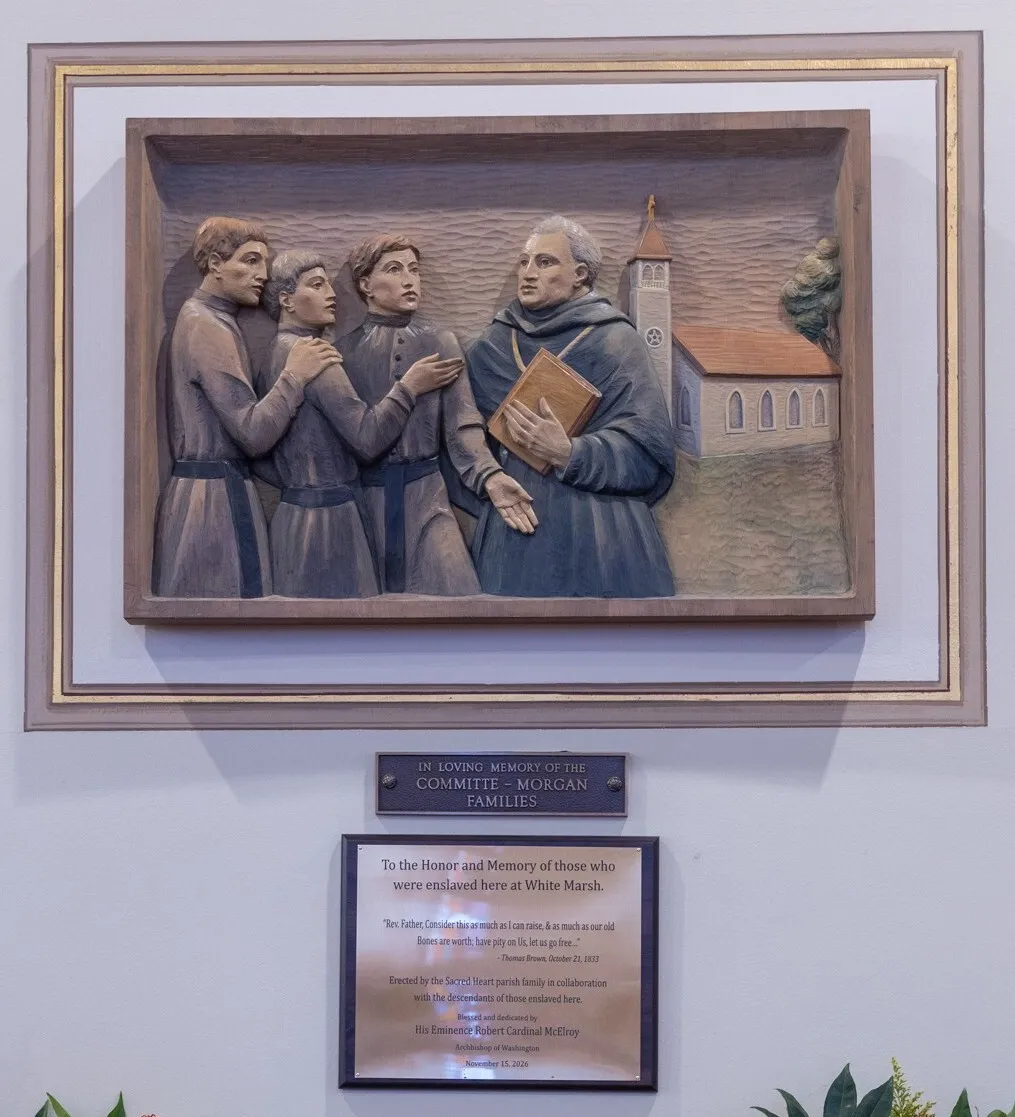
At Sacred Heart Church in Bowie, Maryland, a plaque to honor and remember those who were enslaved at the Jesuits’ White Marsh Plantation has been placed beneath a memorial to the Jesuits who lived and ministered in that area. Washington Cardinal Robert W. McElroy blessed the plaque during a Mass on Nov. 15, 2026 at the church. Sacred Heart Church and its historic chapel and cemetery are located on part of what been the White Marsh Plantation, where the enslaved lived, worked and died in the 1700s and 1800s before Emancipation. (Catholic Standard photo by Mihoko Owada)
An 1833 plea for freedom by Thomas Brown, a man enslaved at the Jesuits’ White Marsh Plantation in Maryland, is at the center of a new plaque at Sacred Heart Church in Bowie, Maryland honoring and remembering those who were enslaved at the plantation. The plaque was erected by Sacred Heart Parish in collaboration with the descendants of those enslaved at White Marsh. Washington Cardinal Robert W. McElroy blessed the plaque during a Mass at the church on Nov. 15, 2026. Sacred Heart Church and its historic chapel and cemetery are located on part of what been the White Marsh Plantation, where the enslaved lived, worked and died in the 1700s and 1800s before Emancipation. (Photo by Stephanie A.T. Jacobe, Ph.D., the director of the Archives of the Archdiocese of Washington)

Before sprinkling the plaque with holy water, Cardinal McElroy prayed that it would “honor the memory of those who suffered the pain and injustice of slavery here at White Marsh.”

The cardinal prayed that plaque memorializing “those who suffered in terrible bondage” would through God’s blessing, “remind us of our duty to act toward justice, to live in fraternal charity, and to proclaim human dignity in word and deed.”
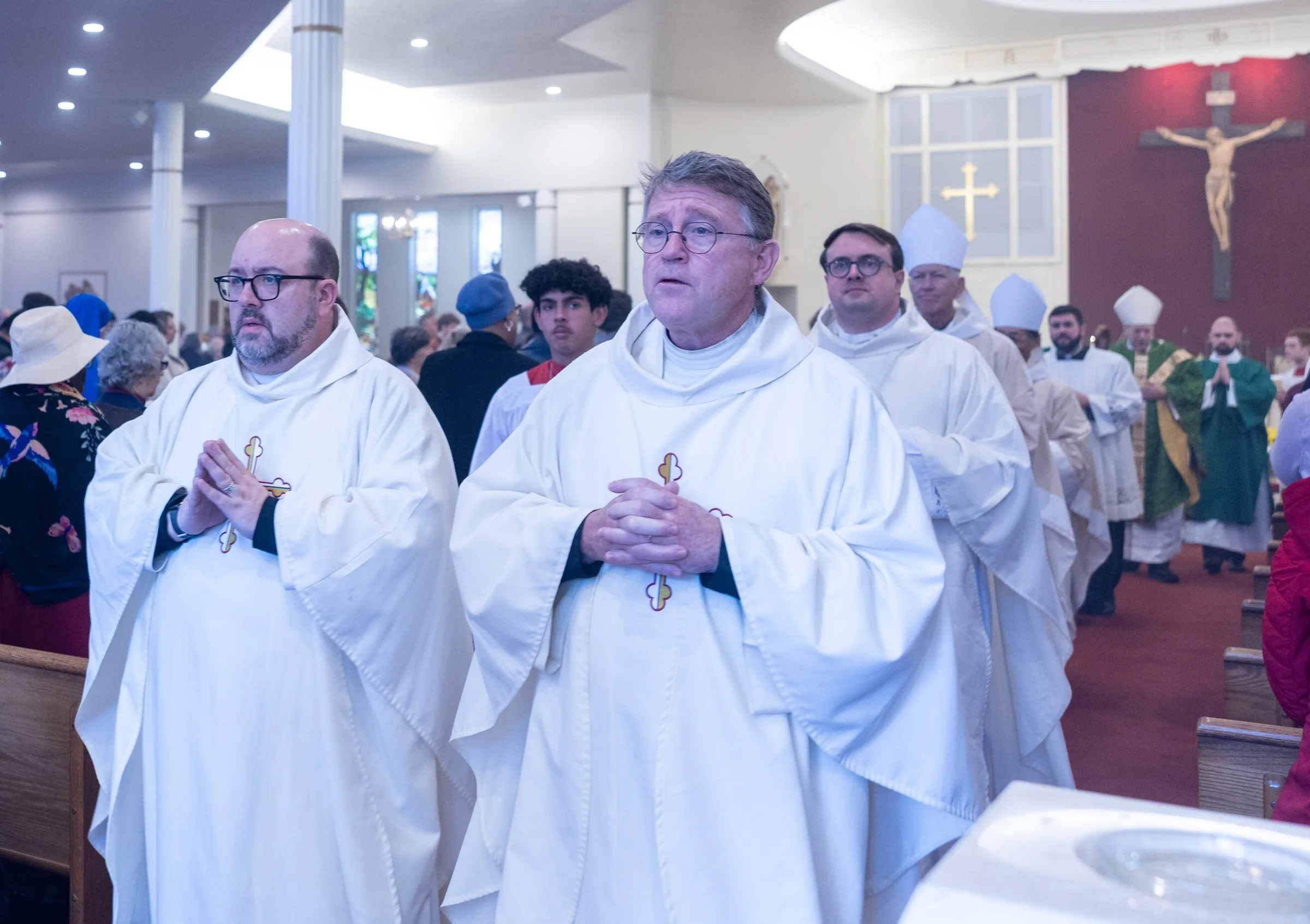
Jesuit Father Sam Sawyer, the president and editor in chief of “America” magazine (at front left) and Jesuit Father William Campbell, the rector of the Georgetown Jesuit Community (at front right) process from the altar after concelebrating a Mass on Nov. 15, 2026 at Sacred Heart Church in Bowie, Maryland, where Washington Cardinal Robert W. McElroy blessed a plaque to honor and remember those who were enslaved at the Jesuits’ White Marsh Plantation in that area in the 1700s and 1800s before Emancipation. Processing immediately behind them are Father Michael Russo, Sacred Heart’s pastor, and Washington Auxiliary Bishop Gary Studniewski. (Catholic Standard photo by Mihoko Owada)

In an interview after the Mass, Jesuit Father William Campbell, the rector of the Georgetown Jesuit Community, said he was moved by the blessing of the memorial at Sacred Heart Church honoring the enslaved at the White Marsh Plantation.

“As the cardinal said, we honor their memory and restore their dignity,” Father Campbell said.
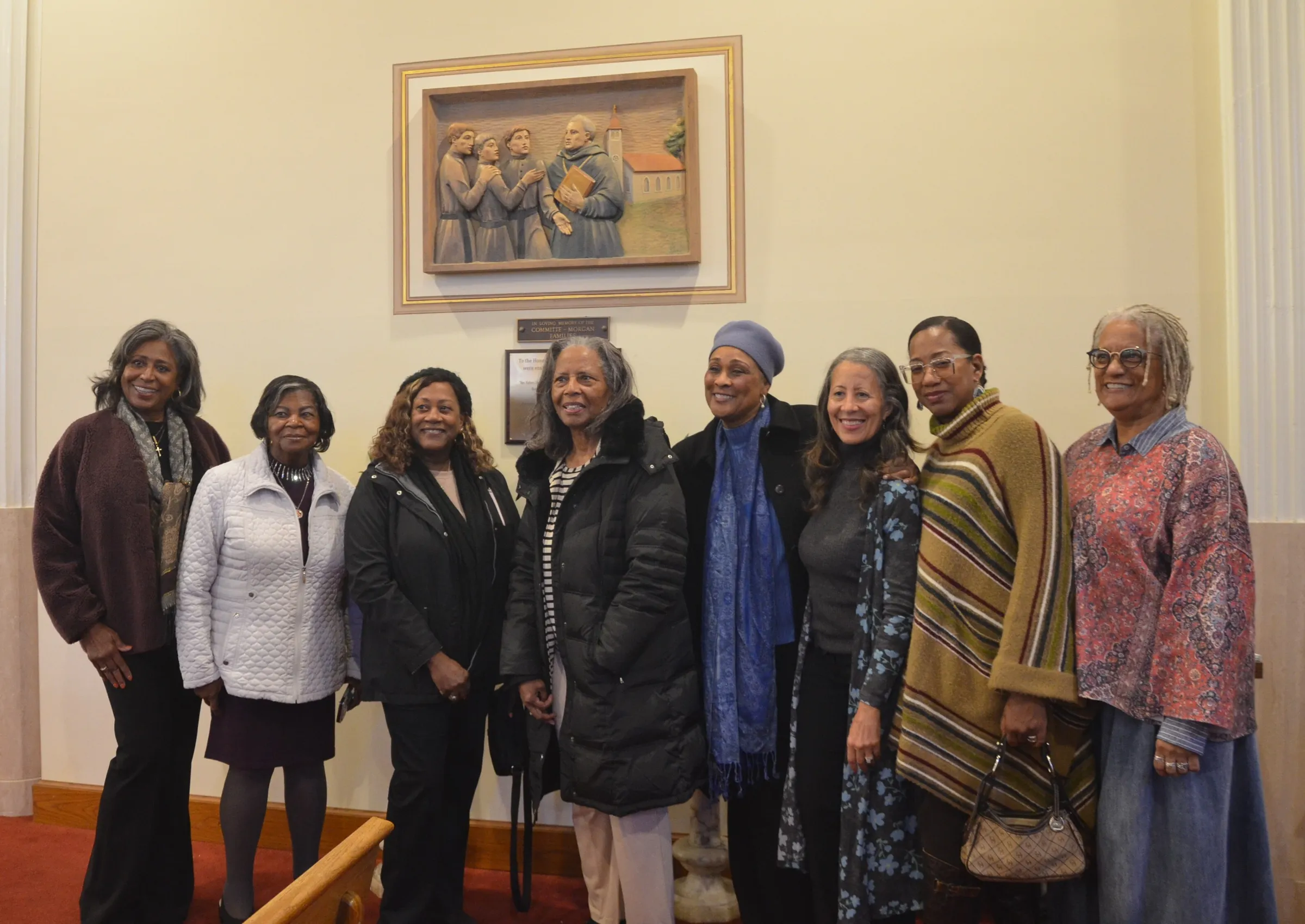
After the Mass on Nov. 15, 2026 at Sacred Heart Church in Bowie, a group of descendants posed together for a photo by the plaque honoring their ancestors who had been enslaved at the Jesuits’ White Marsh Plantation. (Photo by Stephanie A.T. Jacobe, Ph.D., the director of the Archives of the Archdiocese of Washington)

Dr. Lynn Locklear Nehemiah, a descendant of ancestors enslaved by the Jesuits in Maryland who is a founding member of the White Marsh Historical Society, noted, “The cardinal talked about us being children of the light. I thought that was very meaningful. We are people of the light. We continue to shine the light on this history. The restoration of the identity of our people is paramount, and I’m truly grateful we’re seeing this come to pass in 2026, in the face of other parts of the culture trying to silence it.”


Share:
Print


Menu
Search