
When Cardinal Robert W. McElroy convened parish lay leaders from across the Roman Catholic Archdiocese of Washington for a series of meetings during the past year, the aim was not simply consultation, but discernment rooted in listening.
Over seven months, the cardinal met with more than 400 lay leaders in groups of 15, meeting with representatives of the archdiocese’s parishes in the District of Columbia and in the five surrounding Maryland counties of St. Mary’s, Charles, Calvert, Prince George’s and Montgomery.
Representatives from urban, suburban, and rural parishes gathered with the cardinal to reflect on the lived realities of parish life and to help shape pastoral priorities for the years ahead. Those conversations – along with consultations with archdiocesan priests – led to the formation of six goals for pastoral action outlined in Cardinal McElroy’s January letter to the faithful.
The six goals include helping parishes invite people to a personal encounter with Jesus, providing formation that deepens sacramental life, celebrating marriage and family life, forming the laity as missionary disciples, caring for those in need, and reversing the exodus of young people leaving the Church.
For many lay participants, the process affirmed a shared love for the Church alongside a clear recognition of the challenges facing parish communities.
In interviews following the consultations, lay leaders described an experience marked by prayerful listening, candid exchange, and a renewed sense of responsibility for the Church’s mission. Their reflections offer insight into how the archdiocese’s pastoral priorities are being received and how lay Catholics hope to see them lived out across Washington, Maryland, and beyond.
Strengthening parishes and families
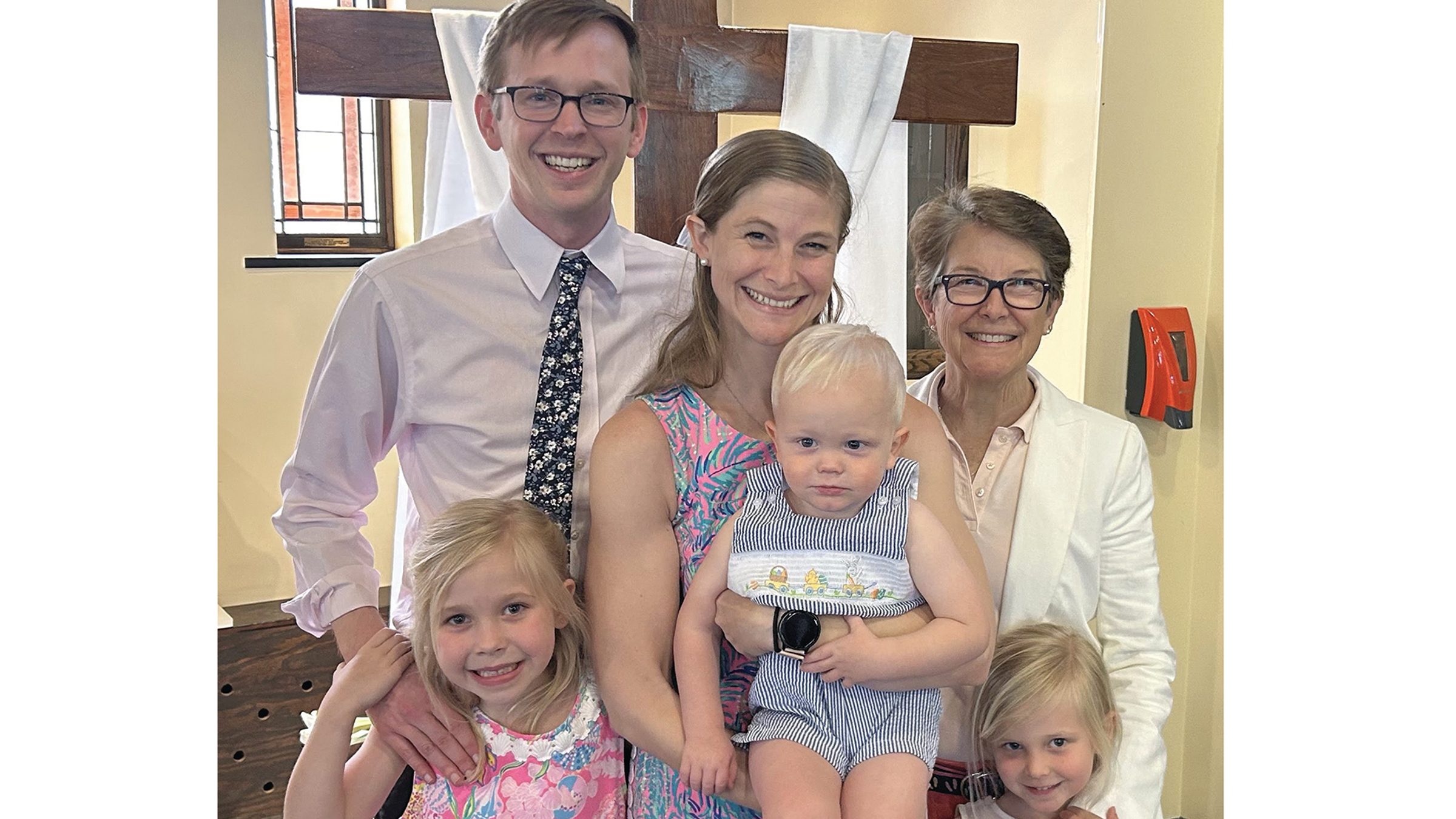
Ryan Mercer, who works in the government technology sector, said participating in the consultation affirmed both his commitment to the Church and the seriousness of the archdiocese’s approach to pastoral renewal.
Mercer serves as the OCIA (Order of Christian Initiation of Adults) leader at St. Bartholomew Parish in Bethesda, Maryland, and entered the Catholic Church in 2024. He described the consultation as prayerful and focused on understanding parish realities rather than advancing agendas.
“It was clear that the goal was not to collect talking points, but to understand the lived reality of parish life,” Mercer said.
As a parent of young children, Mercer said the priority of supporting marriage and family life resonated strongly. He reflected on the openness with which children approach faith and the formative impact of early encounters with Christ.
“When parishes support families through reverent liturgy, strong formation, and a culture that welcomes children,” he said, “it strengthens not only those families, but the entire parish community.”
Mercer said he hopes the pastoral priorities will lead to concrete support for families and renewed emphasis on the sacraments as authentic encounters with Christ, as well as greater collaboration among parishes.
“If these goals are lived consistently across the archdiocese,” he said, “I believe they can help cultivate parishes where faith is not merely maintained but genuinely passed on.”
‘A true environment for listening’

Felipe Urquilla, an administrative specialist for local government and a catechist, youth leader, and adult prayer group leader at St. James Parish in Mount Rainier, Maryland, said participating in the consultation felt both affirming and formative.
“The consultation was a peaceful platform that created a true environment for listening,” Urquilla said. “That listening brought us closer together, as we voiced the current realities of our own communities and listened to the experiences of others.”
Urquilla said the spirit of connection extended beyond the meeting. He remains in contact with several participants and has since taken on new ministry work, motivated by what he heard during the consultation.
Several of the pastoral priorities aligned closely with work already underway in his parish, particularly fostering a parish culture that invites a personal encounter with Jesus Christ. He also pointed to deepening sacramental life through formation as an area of growth, expressing hope that parish-based formation efforts could expand more broadly.
Urquilla said renewed attention to marriage and family life and to caring for migrants, the unborn, and other vulnerable populations addresses longstanding needs, especially in smaller parishes with limited resources. The formation of the laity as missionary disciples also resonated deeply with him. Having completed the Encounter School of Ministry, he said the pastoral priorities mirror his own commitment to forming young people for mission.
The goal that struck him most forcefully, Urquilla said, was reversing the departure of young people from the Church. After working in youth ministry since 2010, he recently took steps to formally establish a Catholic youth ministry at his parish.
“My hope is that every parish becomes a place where people encounter Jesus’ transforming love and feel compelled to share it with others,” he said.
Every parish matters

Susan E. Schwab, a longtime parishioner of St. Ignatius in Chapel Point, Maryland, said Cardinal McElroy’s decision to meet personally with lay leaders sent a clear message that every parish matters, particularly those in rural areas. Schwab has been a member of St. Ignatius for nearly 30 years. She and her husband joined the parish after moving to the area, raised three children who attended Catholic school from grade school through college, and have operated Area Walls Incorporated, their construction company, for more than three decades.
“Ours is a large and diverse archdiocese, encompassing both urban centers and extremely rural areas,” Schwab said. “By meeting with representatives from every parish, Cardinal McElroy demonstrated from the outset that every parish matters.”
At St. Ignatius Parish, Schwab serves as chair of the parish’s Finance and Advisory Council, chair of the Social Concerns Tithe Committee, and as an extraordinary minister of Holy Communion. She said two of the pastoral priorities resonated most strongly with her: reversing the departure of young people from the Church and celebrating marriage and family life.
Over decades of parish involvement, Schwab said she has seen families drift away from the Church following separation or divorce, often believing they no longer belong.
“Many people I have spoken with were unaware that the annulment process even exists,” she said, adding that others assume it is unattainable or do not know where to begin.
Schwab emphasized the centrality of the Eucharist in Catholic life.
“In receiving Holy Communion, we receive God Himself, who loves us, comforts us, and heals our hearts,” she said.
Looking ahead, she expressed hope that the pastoral priorities will help change misconceptions and create clearer pathways of welcome, healing, and accompaniment.
“We are blessed to have a cardinal who took the time to listen carefully and assess the needs of the archdiocese,” she said.
Nurture this great gift of faith

Abigail Strawberry, a pharmacist and longtime parish leader at Our Lady Help of Christians in Waldorf, Maryland, said the consultation affirmed both the diversity of the archdiocese and the shared mission uniting its parishes.
“I was thankful for the platform to address the cardinal and help form some direction as he shepherds us in our diverse Archdiocese of Washington,” Strawberry said.
She described the consultation as an experience of unity among lay leaders from parishes with varied cultural contexts and challenges.
“I felt heard by Cardinal McElroy,” she said.
Strawberry said the six pastoral goals reflect concerns already present in parish life and emphasized the central importance of a personal encounter with Jesus Christ, rooted in family life and sustained through the sacraments.
“We have to nurture this great gift of faith we were given at Baptism and continue to grow in our faith formation and passing on our faith by living an intentional sacramental life, and as a parish to meet our parishioners and those in the community ‘where they are’ so we can come together as a body of Christ and minister to each other, especially the vulnerable,” she said.
At Our Lady Help of Christians, Strawberry said that vision is reflected in a diverse parish community that includes Hispanic, Filipino, French-speaking parishioners, members of the Neocatechumenal Way, and celebrations ranging from Spanish-language Masses to Simbang Gabi, the Filipino tradition of a novena of nine evening Masses held at the church leading up to Christmas, and the feast of Our Lady of Guadalupe, the patroness of the Americas.
Looking ahead, Strawberry said she hopes the pastoral priorities lead to concrete formation opportunities that help parishioners grow as missionary disciples and walk alongside those who feel marginalized or disconnected.
“We are pilgrims on a journey,” she said, “and we are called to extend the hope and mercy of Jesus to all.”
‘A deeper relationship with Christ’

Ralph McCloud, the former director of the United States Conference of Catholic Bishops’ Catholic Campaign for Human Development (CCHD) anti-poverty program, is a member of St. Teresa of Avila Parish in Washington, D.C., where he serves as a lector and is a member of the Finance Council.
He was among the parish lay leaders whom Cardinal Robert W. McElroy met and consulted with over the past year. McCloud called his consultation with other parish lay leaders and Cardinal McElroy “refreshing and relaxing.” He said the encounter was “affirming that Pope Francis’s (and) Pope Leo’s initiatives and insights were trickling down to parish and diocese levels.”
“There was a sense of both belonging to the Universal Church and belonging to our local community,” McCloud said.
Of the six goals for pastoral action that resulted from the consultations with the lay parish leaders and input from the archdiocese’s priests, McCloud said care for the vulnerable: migrants, the unborn and the marginalized, “struck me the most.”
Earlier in his career, McCloud was the division director of Pastoral and Community Services in the Diocese of Fort Worth, Texas, where he supervised the Departments of Family Life, Peace and Justice, African-American Ministry, Ministry to the Incarcerated, Ministry to People with Disabilities, Hospital Ministry, and Hispanic Ministry.
“It (care for the vulnerable) was consistent with my ministry,” McCloud said. “The cardinal was keen in his listening and concern for this goal.”
Two of the other goals in the pastoral action also struck McCloud as particularly important to the local Church.
He said he was “excited to see” formation of the laity as missionary disciples as a goal and priority, because “I felt that we as Church are weak in forming faith-driven, Spirit-led disciples equipped with the tools for evangelization of the culture.”
Reversing the avalanche of young people leaving the Church, McCloud said, “was clearly articulated by the folk who attended my session with the cardinal.”
“This continues to be an ongoing concern for members of my parish and beyond,” he said, adding that he was “glad that this rose to a pastoral goal.”
The goals and priorities can be successfully actualized and implemented in this archdiocese, McCloud said, “by recognizing a connectedness to each other.”
“My hope is that the faithful will embrace all of the goals and work towards a deeper relationship with Christ that impacts all of the other goals,” he said.
Working together makes us stronger

As Cynthia Battle participated in the consultation with Cardinal McElroy, she said, “my first impression was, ‘Wow! He actually came to listen.’ ”
“I felt he (Cardinal McElroy) was genuinely interested in our thoughts,” Battle said, adding that the consultations evolved into a “real discussion that included hopes, dreams, and actions within parishes.” Because the meeting was so successful, she said, “there should be more opportunities like this – not as exercise but real discussions that lead to real results.”
At her parish – Our Lady of Perpetual Help in Washington, D.C. – Battle serves as the director of faith formation. She formerly served as president of the archdiocese’s Catechetical Leaders Association. She has been a teacher of religion, instructor of liturgy and adult catechesis, the local coordinator for the North American Forum on the Catechumenate and a regional consultant for the archdiocese’s Office for Religious Education.
Of all the goals that resulted from the consultations, Battle said, celebrating marriage and family life, “resonates with me not because of who it includes, but who it does not.”
“The Church often celebrates marriage and family life… but it fails to include single, unmarried, not consecrated, people,” she said. “The word family has a connotation of parents and children (while) omitting people with no children. The first thing we must do is to help them understand that the family is the domestic Church, (and) what exactly does that mean in their lives.”
As one active in faith formation, Battle pointed out that the goal of providing such formation in a way that deepens the sacramental life of the Church can be attained when the “parish community becomes entrenched in the sacraments and the parts they play in the life of the Church.”
“That means the parish is not only witnessing the celebration of the sacraments but becomes fully engulfed in the process, and formation becomes entwined in the process,” she said. By doing so, “the parish has become a stakeholder, lives a sacramental life and good catechesis at the same time.”
She also pointed out that the best way to reverse the avalanche of young people leaving the Church “is to train and have other young people become the face of the evangelization of young people.”
“It cannot be done in a classroom setting,” Battle said. “The use of social media, the way many young people communicate, I don’t think is the answer – a good tool maybe, but just that a tool. Nothing replaces relationships.”
Battle suggested parishes can develop a culture of inviting people to a personal encounter with Jesus by helping parishioners “identify their personal encounter with Christ, and then help them to become comfortable with witnessing that encounter with others.”
She said those participating in the consultation process “discovered that we share some of the same struggles, challenges, and goals.”
“I hope that once parishes determine which goal or goals they want to implement, they would come to share ideas and work together to reach that goal,” she said. “My hope is that parishes from the same deanery do not work together. One thing that I have learned over the years is that when we only work with those we know, those we are comfortable with, we limit ourselves from what we can learn from others. Working together makes us stronger.”