“Ours is a world of nuclear giants and ethical infants. We know more about war than we know about peace, more about killing than we know about living. We have grasped the mystery of the atom and rejected the Sermon on the Mount.”
These words were spoken by General Omar Bradley at an Armistice Day commemoration in 1948, three years after the atomic bombings of Hiroshima and Nagasaki in Japan ushered the world into an era during which, for the first time, human beings had the power to end civilization with the stroke of a president’s (or Soviet chairman’s) pen. But they were also quoted by Archbishop John C. Wester of Santa Fe, New Mexico, as he accepted Pax Christi USA’s Teacher of Peace Award for 2026 at Trinity Washington University on Nov. 21.
Pax Christi USA bestowed the Teacher of Peace Award upon Archbishop Wester in recognition for his “years of commitment to the abolition of nuclear weapons and his consistently strong and clear support of migrants and refugees.” Lauren Agresti, a lawyer with the Torture Abolition and Survivors Support Coalition, received the Sister Dianna Ortiz OSU Peacemaker Award for her support of refugees and asylum seekers through their legal processes. Cardinal Robert W. McElroy, the archbishop of Washington, and Archbishop Gabriele Caccia, the apostolic nuncio to the United States, both attended the ceremony.
The Pax Christi movement was founded in 1945 by French peace advocates Marthe Dortel-Claudot and Bishop Pierre Marie Théas of Montauban. While they had been active in the Church’s resistance to Nazism during the Second World War, they founded Pax Christi in order to promote Franco-German reconciliation. Pope Pius XII gave Pax Christi his blessing as an international Catholic peace movement in 1952. Pax Christi is headquartered in Brussels, and has been officially present in the United States since 1972.
In his acceptance speech, Archbishop Wester noted that, while the threat of nuclear catastrophe had seemed to recede after the end of the Cold War, a recent increase in nuclear proliferation and a U.S. government effort to modernize the American nuclear arsenal has brought the world back to the brink.
“We’re in a second arms race far more dangerous than the first, due to heightened tensions between nations and artificial intelligence,” he said.
Archbishop Wester questioned the morality of nuclear deterrence, which he characterized as “a system based on mutual destruction” which “places us one accident, one careless mistake, one miscue away from nuclear holocaust.”
While deterrence is often held up as a core principle of international relations by self-described realists, Archbishop Wester charged it with perpetuating mutual distrust and acrimony between countries, creating an incentive structure for governments to perceive their peers primarily as threats. “At the very core of deterrence is violence: you bomb us, we bomb you,” he said. Under these conditions, he suggested, the peace brought about by deterrence is not a positive peace but a negative stalemate.
In contrast to this logic of violence, Archbishop Wester held up Pax Christi’s decades-long advocacy for nuclear abolition, connecting its message of disarmament to the peace that Jesus proclaimed to his disciples when he appeared to them after the Resurrection.
“You have embraced the history of the Gospel and the purpose of the Incarnation,” he said to the members of Pax Christi. “God became one of us to bring peace, unity, and a restoration of right relationships.”

Sister Dianna Ortiz, an Ursuline Sister of Mount Saint Joseph, was abducted and tortured by the Guatemalan military while serving as a missionary in 1989, during the latter phase of the country’s decades-long civil war. Declassified documents later demonstrated that the Guatemalan security forces responsible for these atrocities had been equipped and trained by the United States government. She passed away in Washington in 2021.
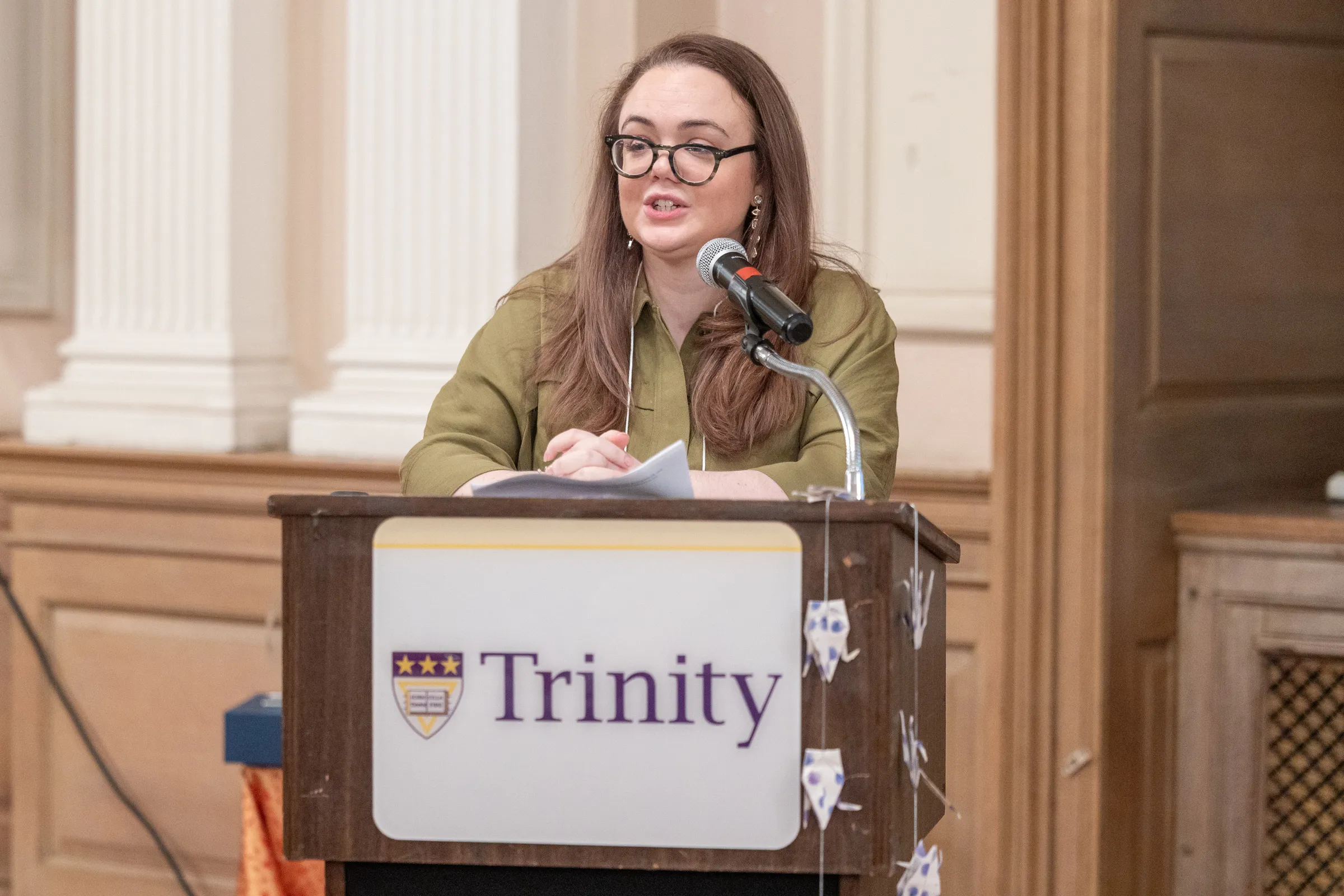
Lauren Agresti, accepting the award bearing Sister Ortiz’s name, acknowledged the troubled history of the sister’s life, and argued that “the pursuit of peace requires a faith that can coexist with brutal reality.”
She added that this capacity for faith, hope, and suffering to exist is constitutive of the Catholic moral tradition. “The path to peace does not call us to deny suffering or to suspend,” she said. “It calls us to continue acting in the presence of suffering and to refuse to let injustice have the last word.”
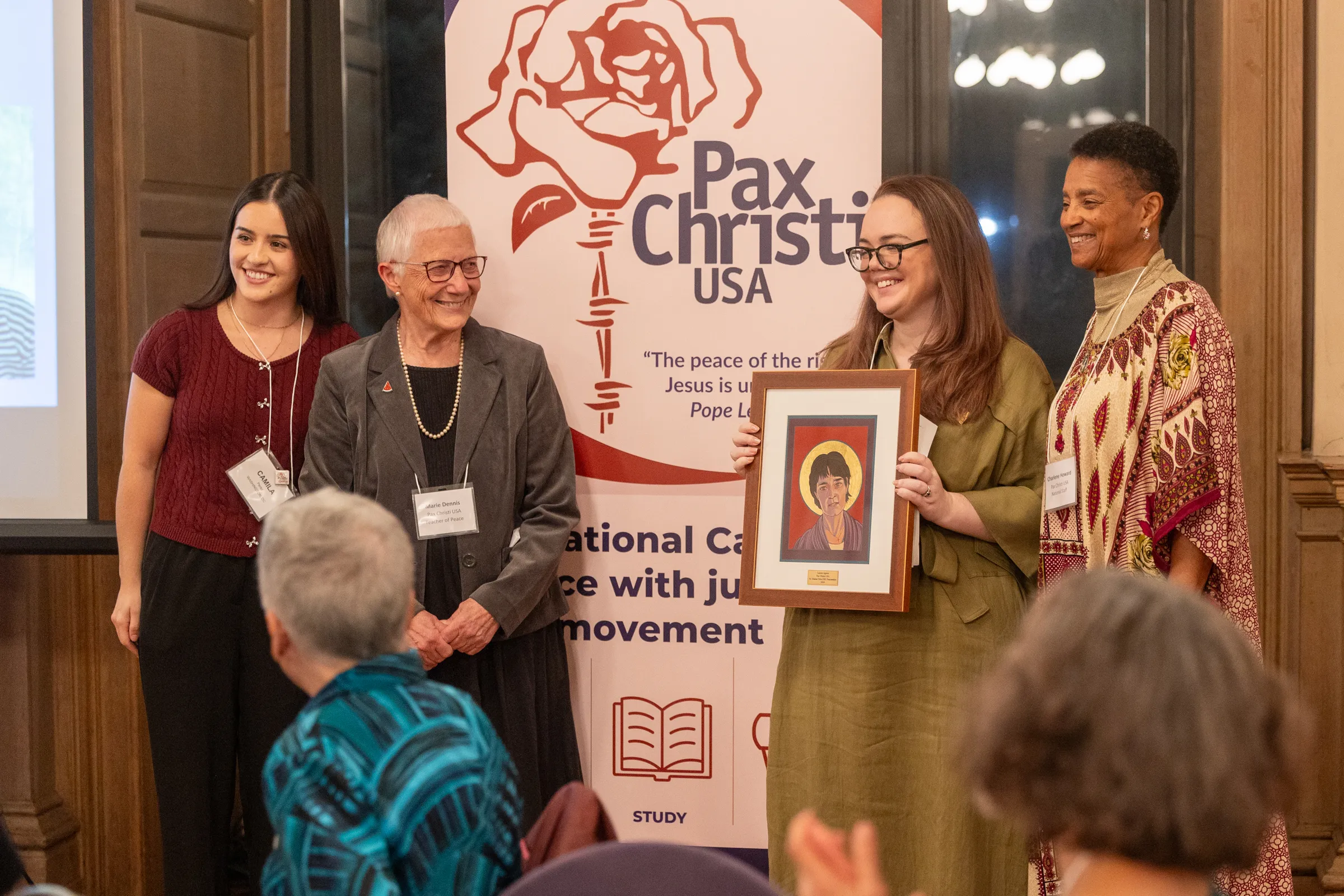
Pax Christi USA has bestowed the Teacher of Peace Award upon a distinguished Catholic peace advocate each year since 1978. Dorothy Day was the award’s inaugural recipient, while others have included the noted Jesuit peace activist Fr. Daniel Berrigan, S.J.; Msgr. Ray East, longtime pastor of St. Teresa of Avila Parish in Anacostia; and Sister Ortiz herself, who received the award in 2000.
Following the ceremony, Archbishop Wester told the Catholic Standard that he accepted the award on behalf of all peace advocates. “We all make each other look good,” he said. “I represent all the members of Pax Christi: everybody who advocates for peace, for nuclear disarmament, and for the protection of immigrants.”
“It’s just wonderful to be part of such energy. We’re trying to put the Gospel into action!,” the archbishop added.
Following his visit to Washington for the awards ceremony, Archbishop Wester will travel to New York, where he will take part in events surrounding the first Review Conference of the Parties to the Treaty on the Prohibition of Nuclear Weapons. He will notably celebrate a Mass for peace alongside Archbishops Paul Etienne of Seattle and Peter Michiaki Nakamura of Nagasaki at Fordham University Church on Dec. 2.