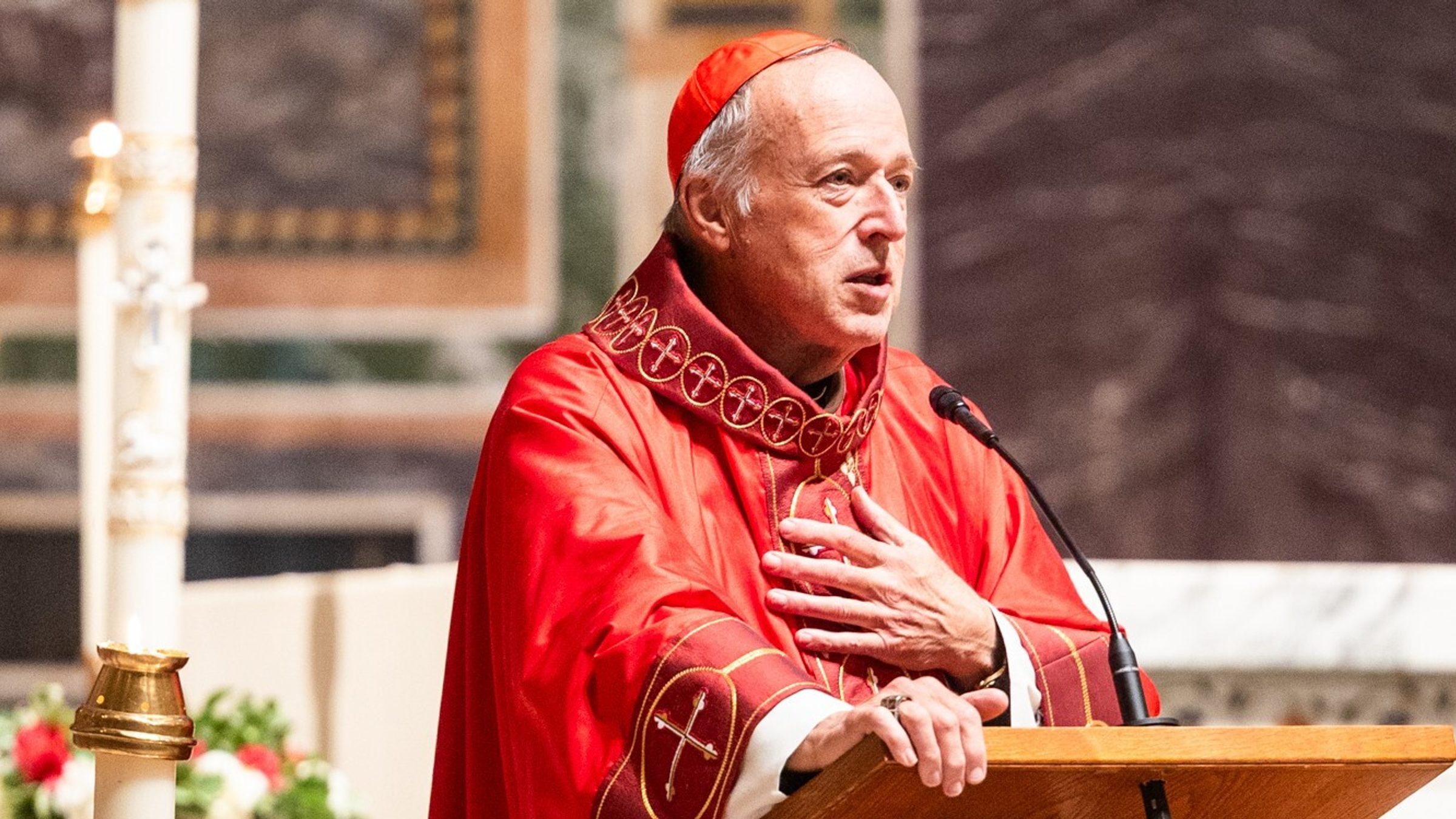

At the press conference on Jan. 6, 2025 where he was introduced as the new Catholic archbishop of Washington, Cardinal Robert W. McElroy said, “I come as your bishop seeking to know and understand this wonderful community of faith.”
As he spoke at the Cathedral of St. Matthew the Apostle, Washington’s new archbishop, who was installed on March 11, noted how Pope Francis had emphasized the concept of encounter. “In seeking encounter, one must truly be open to understanding the background, the experiences, the opinions, the dreams and the challenges of the other,” Cardinal McElroy said.
Then he explained a key goal that he had in leading his new archdiocese.
“As your pastor, an essential element of my mission is to encounter the hearts and souls of the disciples who form our local Church. For this reason, during the coming months I will undertake a series of meetings, focusing on the priests of the Archdiocese and the lay leadership of our parishes, which will be an initial step in my process of coming to know the Archdiocese of Washington,” he said.
One year later, Cardinal McElroy issued a summary report on the consultations with parish lay leaders that he had undertaken as archbishop, and the pastoral priorities that had resulted from that effort and the input of the archdiocese’s priests.
The complete text of the cardinal’s report on the consultations and pastoral planning, with a summary of the key issues that were raised, appear in a special pull-out section of the Catholic Standard and Spanish-language El Pregonero newspapers of the Archdiocese of Washington on pages S1 to S4 of their Jan. 15, 2026 editions, and are posted on their websites.
The six goals for pastoral action include helping parishes invite people to a personal encounter with Jesus, providing formation that deepens sacramental life, celebrating marriage and family life, forming the laity as missionary disciples, caring for those in need, and reversing the exodus of young people leaving the Church.
In a Dec. 18 interview with the Catholic Standard and El Pregonero, Cardinal McElroy said he felt the consultations were necessary for two reasons.
“One was to come to know the archdiocese, and I wanted to see the archdiocese both through the eyes of the lay leaders of the parishes and the priests. The second reason is to begin to form priorities for pastoral work for the coming five years,” he said.
The cardinal in his report on the consultations noted that shortly after his installation as Washington’s archbishop, he asked pastors to appoint three leaders from each parish to participate in the meetings. Over seven months, the cardinal met with more than 400 lay leaders in groups of 15, meeting with representatives of the archdiocese’s parishes in the District of Columbia and in the five surrounding Maryland counties of St. Mary’s, Charles, Calvert, Prince George’s and Montgomery.
A time of listening
During the interview, Cardinal McElroy said that in those sessions of prayer and reflection, he drew on the conversational format that Pope Francis had used for the Bishops’ Synods on Synodality in Rome, which the cardinal had participated in.
“It was a synodal experience,” he said, noting the consultations would begin with Scripture readings from Acts of the Apostles and reflective prayer, seeking the guidance of the Holy Spirit as the Apostles did at Pentecost. Then people would share three-minute individual reflections on what they thought are the most important challenges, joys and accomplishments in their parish or in the archdiocese, and any other matters they wanted to talk about.
Each participant shared his or her prepared statement without comments from anyone, then after everyone had a chance to speak, they prayed together and had a discussion on any of the issues that had been raised, but “you could not go back to your own issue,” the cardinal explained.
“So the three hours were prayer, listening to the prepared input from all of us, and in light of that, having a mutual conversation,” he said.
Cardinal McElroy said he was very moved to listen and hear “what are the issues people have… The whole conversation was grace-filled. Some of them were things they felt were going really well, and some of the things they think are challenges, (where) we’re not doing as well and should move in a different direction.”
In his summary report of the consultations with parish lay leaders, the cardinal listed other key issues that had been raised during the discussions, including the challenges Catholic schools are facing, the safety of young people and the issue of sexual abuse, multicultural issues in parish life, the importance of focusing on Church teaching, communicating the faith especially through social media, promoting vocations, renewing parish organizations after the Covid pandemic, the relationship of parishes with the archdiocese and cooperation among parishes, and infrastructure and maintenance costs. The cardinal noted that throughout the discussions, “there was great love expressed for the service of the priests of the archdiocese.”
Charting a course
At the Convocation of the archdiocese’s priests in November, Cardinal McElroy presented the summary report of the consultations to them.
“Then they sat in small groups and came up with their own goals, based on what the lay people said, and based on their own pastoral experience and understanding,” the cardinal said in the interview.
The six goals for pastoral action in parishes, schools, social service agencies and the archdiocese over the next five years “emerged from the priests having listened to what the laity input was and then (following) their own prayer and reflections,” Cardinal McElroy said.
The archdiocese’s Council of Priests recommended against issuing a formal pastoral plan, which can take a year or two of additional planning and consultations.
“I spoke with the Council of Priests about it, and we came to a strategy where, I’ve set up a committee now that will probably over the next three months, come up with a list of opportunities, best practices, ways of implementing the plans in parishes in the archdiocese for each goal… That’s how we’re going to enflesh it,” the cardinal said.
The different pastoral realities of each parish will mean that they implement the goals over the next five years in different ways, he added.
“The first goal which we all agree is the most important goal is to form a parish culture which leads people to a penetrating personal encounter with Jesus Christ. We all agree that’s the most important one, but how you do that in the different parishes is going to be different. So the notion is, we all need to be moving in the same direction, we all need to be bringing all six of these goals into the life of the parishes of the archdiocese in the period of these coming years, but the exact specification of that is going to look different from place to place,” Cardinal McElroy said.

Reversing a tide
The goal to “reverse the avalanche of young people leaving the Church” emerged from what the cardinal said in his summary report “is heartbreaking for parents and grandparents, and a source of anguish for all those looking at the future of the Church in our Archdiocese and the country… There was no topic in the dialogues that drew more comments and sadness than this one, and none with a greater sense of urgency.”
In the interview, Washington’s archbishop noted that “as for the young adults, (there was) tremendous witness to the importance of them, partly from young adults themselves who were present, and partly from the parents of young adults, (some who expressed) a great sadness that children they had raised in the Church now had left the Church. That came up all the time, in all the different counties.”
Cardinal McElroy said some young adult participants described their peers as drifting away from active Catholic belief while not necessarily rejecting the Church, reflecting a trend of young adults seeking spirituality, but not within the context of the Catholic faith.
Reaching out to those “seekers,” and stemming the exodus of young adults from the Church, will, along with the other goals for pastoral action, be a key priority for the Archdiocese of Washington in the next five years.
As the bishop of San Diego, Cardinal McElroy launched a synod to consult with young adults about how that diocese could better engage and serve them.
The cardinal noted that he has appointed a task force chaired by Father Conrad Murphy, the chaplain at the Catholic Student Center at the University of Maryland in College Park, to look at teenage and young adult ministries at parishes and campuses, and examine programs that have worked locally and elsewhere, and to think creatively about new initiatives. That task force is preparing a report, and the outreach will be funded by a multi-year grant.
“I like experiments, in terms of seeing what pathways will work here in Washington,” Cardinal McElroy said, noting that programs will vary at parishes. “There won’t be a common pathway to how to do young adult ministry, but the reason I like to do experiments is, because you can see, is this going to work, (and) if not, you can move out of that onto a different pathway. We have resources, we have people enthusiastically involved to try to come up with pathways forward that will help make this ministry robust in the archdiocese.”
The cardinal added that “the focus is on trying to discern what works and what doesn’t work, and understanding that what will work in one locale or context does not work in the other necessarily, so it’s going to have to be a multi-pronged approach with young adult ministry… That’s why the experimentation is important, to find out a menu of avenues through which we can help bring young people back into the Church or bring them to fuller involvement in the Church or deal with alienation from the Church.”
Issues close to home
Another of the six goals for pastoral action is “Care for the vulnerable: Migrants, the Unborn and the Marginalized,” and those issues hit close to home for the archdiocese and its parishes and for Catholic Charities, which is the largest non-governmental social services agency in the metropolitan area.
“They’re all pressing issues,” Cardinal McElroy said in the interview, noting, “We have the March for Life coming up, and we’re trying to figure out how to do the outreach there as effectively as possible.”
The cardinal noted that he has met with a group of priests involved in ministry with the undocumented and with some lay people, “on what we should do, in terms of developing a fairly coherent plan of action… We’re going to set up a plan for the archdiocese on the undocumented question… It will be a multi-pronged approach.”
Washington’s archbishop said the Catholic bishops leading dioceses in Maryland recently met with the state’s governor, Wes Moore, and they spoke about bridging their efforts on this issue, “what are the areas where state action and programs and resources, and the resources and programs of religious communities can work in sync to advocate for and embrace and give help and assistance to undocumented men, women, children and families.”
In September at a Mass at St. Matthew’s Cathedral following a prayerful procession through the city to mark the World Day of Migrants and Refugees, Cardinal McElroy decried the federal government’s policy of mass deportation of undocumented immigrants, which he described as a “governmental assault designed to produce fear and terror.”
In the interview, Washington’s archbishop noted that a country “securing the border and deporting those who are convicted of serious crimes is consistent with Catholic teaching.” But he criticized the current policy of “a generalized deportation that goes after everybody who is not legally here, and a huge part of that is the break-up of families that occurs, and people who have been here 10, 20, 30, 40 years now are being hunted down.”
Cardinal McElroy said the discussions with parish lay leaders highlighted the variety of different immigrant groups in the archdiocese – the majority being Hispanic, along with communities with roots in Africa and Asia – and the challenges they face, including the caricature that portrays new immigrants as a “destructive force” and overlooks “the tremendous good they do for our society, (and that) they’re part of the fabric of our society.”
In his summary report, the cardinal noted, “The dialogue participants showed profound compassion for the undocumented men, women, children and families who are suffering at this time. From those parishes with large immigrant populations and those with very few, the participants in the dialogues spoke of the communion in Christ that we share with our undocumented brothers and sisters, and our obligation to stand visibly with them at this moment.”
Archbishop in nation’s capital
In the interview a few weeks before the one-year anniversary of Pope Francis appointing him as Washington’s archbishop, Cardinal McElroy said “everybody’s been very welcoming to me.” He expressed appreciation for the “great vibrancy” he has experienced in his new home, and the sense of community among the priests.
Asked about being the spiritual leader of Catholics in the nation’s capital, the cardinal said, “It’s an important thing not to be partisan. What that means is, not speaking out every day, first of all, but choosing moments to witness on, say this issue, where we do with abortion on the March for Life.”
Cardinal McElroy underscored that “for Catholics, certainly for bishops but also for lay people, the Catholic voter is homeless in terms of political parties, because the parties bifurcate Catholic social teaching. In a way that gives us as bishops a sense of independence, because we have to speak out in a way that’s going to alienate either one of the parties in this hyper-polarized world on things that we say, and it keeps us from succumbing to any one political party as long as we keep that in mind. And then there’s the pastoral question. I don’t want to spend so much attention on political issues that it obscures the pastoral core of what my role is.”
At his initial press conference one year ago when he was introduced as Washington’s new archbishop, Cardinal McElroy emphasized that, “Forming a vision for the Archdiocese for the coming years will have to be a truly collaborative effort if it is to guide us through the challenges which we now face and will face in the future, and help us to seize the opportunities for pastoral growth that lie within our midst. And it will have to be an effort continuously rooted in the Risen Lord who is our hope and our strength.”
Reflecting on the consultations with parish lay leaders and the input from priests that formed the archdiocese’s goals for pastoral action, Cardinal McElroy said in the interview that it was important for him to have that as his “entry point” as Washington’s new archbishop, so he could “come to understand, on a certain fundamental level, the realities and the graces in the Archdiocese of Washington.”
Link to Cardinal McElroy's report on Consultation and Pastoral Planning for the Archdiocese of Washington:
https://www.cathstan.org/local...
Link to summary report of Cardinal McElroy's Consultation with the Lay Leaders of the Parishes of the Archdiocese of Washington: