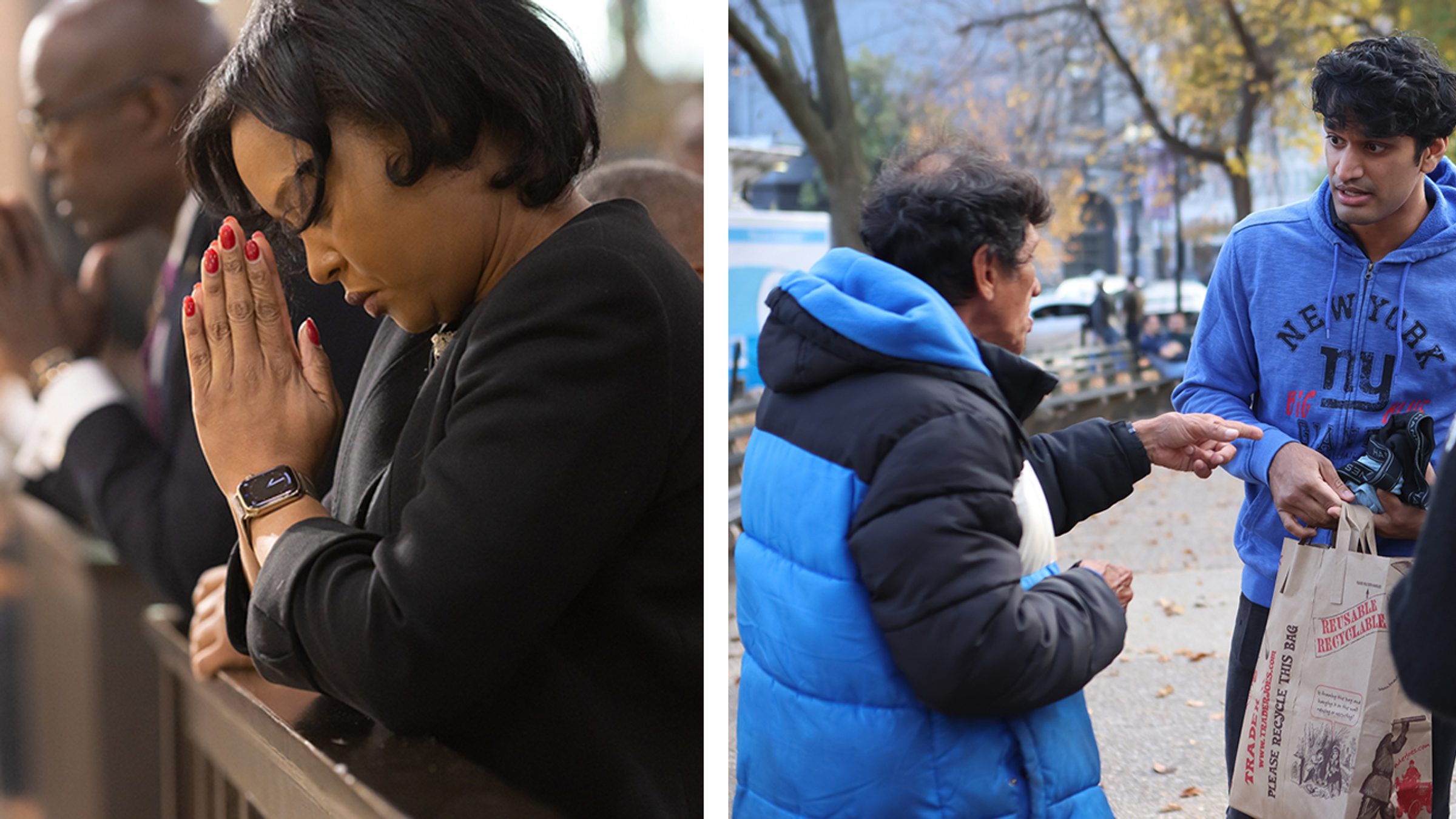

Between March and October of 2025, His Eminence Robert Cardinal McElroy met with 400 lay leaders who had been appointed by their pastors, in order to come to understand more fully the reality of pastoral life in our local church through the eyes of those who work and lead the ministries and apostolates which animate parish life. Each meeting consisted of representatives from five or six parishes. Using a synodal method of dialogue, the meeting began with a reading from the Acts of the Apostles, followed by a period of reflective prayer. Then each parish representative gave a prepared statement of what they thought Cardinal McElroy should know about parish life and the Archdiocese. After these presentations were completed, there was a general discussion on the points that had been raised, and which ones merited the greatest attention.
The following summary represents the major elements that were raised in these synodal dialogues:
- The Sacramental Life of the Church. The participants consistently conveyed that the sacramental life of the Church was their primary pathway of an encounter with God. The Eucharist is the centerpiece of their worship and the life of the community. The richness of the sacrament of Confession was also repeatedly pointed to as a much-treasured moment of an encounter with the Lord.

A number of lay leaders commented on the need for more formation about the theology and meaning of the Eucharist, as well as the Real Presence. There was a widespread feeling that the knowledge level of our parishioners about the sacraments needed to be increased. There were also many comments on the harm that Covid had done to the participation of Catholics in the Eucharist, and many felt that it should have been handled differently in the Church.
Some Catholic leaders felt wounded by the limitation of the Pre-Conciliar Mass within the Archdiocese and seek its restoration in their parishes. Others felt that some priests had come into their parishes trying to turn the clock back on their liturgies in a manner the parish did not want.
Adoration of the Blessed Sacrament was widely pointed to as a great spiritual resource for the people of the Archdiocese. Processions and expressions of popular piety were also valued, particularly within the cultural communities of our Archdiocese.

2. The Avalanche of Young People Leaving the Church. The growing secularization of our society has influenced an overwhelming number of young adult Catholics to leave the Church. This is heartbreaking for parents and grandparents, and a source of anguish for all those looking at the future of the Church in our Archdiocese and the country. The departure of so many young Catholics from their faith is seen not as a dramatic break arising out of anger, but rather a drift from active participation in the life of the Church. And it is compounded by the reality that the historic reentry points into the Church – the moments of Catholic marriage and baptism of children – have also collapsed. There was no topic in the dialogues that drew more comments and sadness than this one, and none with a greater sense of urgency.

There was a desire for new forms of evangelization to reengage young people. Issues of sexuality were raised as a source of alienation from the Church. In rural areas, parish leaders spoke about the powerful pull of megachurches. Many called for the development of young leaders within parish life. Also, opportunities for engagement such as Theology on Tap and the cultural outreaches toward young adults were recommended. Some pointed to the success of our youth summer camps as a point of engagement with youth and young adults. Many urged finding new spiritual pathways to link our young people to God’s presence in their lives and the overpowering love of Jesus Christ. Service projects for the needy were given as illustrations to these new pathways that could bring drifting Catholics gradually back into the Church.
3. There was great love expressed for the service of the priests of the Archdiocese. This love was not merely abstract respect for the priesthood, but a warm and concrete expression of gratitude for the priests of the parishes who work so ardently, often in difficult circumstances. The participants conveyed their conviction that the ministry of the priest is inherently relational, and that each priest brought different dimensions of holiness and service.
This very relationality was the source for questions about the assignment of priests. A number of parishes pointed to high turnover in their pastors, with damaging effects. Others questioned the basis for apportioning priests within the Archdiocese. Some felt that the larger parishes have a proportionately smaller number of priests, with those priests having to work harder. There were fears in many small parishes that they might be closed because of a lack of priests. Cardinal McElroy stated in many sessions that he will not close churches or parishes, but that not every parish and church will be guaranteed its own priest in the coming years. Some participants suggested that deacons could alleviate this shortage in some cases.

4. Multicultural Issues in Parish Life. There is immense cultural, racial and ethnic diversity within The Roman Catholic Archdiocese of Washington; this provides a great richness in our local church. But it also brings the challenge of differing cultural communities living and worshiping within the same community. The participants believe that tremendous progress has been made on this topic, but much more needs to be done. Linguistic differences compound these challenges, especially when trying for a sense of unity in the parish and the development of comprehensive parish leadership structures and communities. There was a feeling among many leaders in our African American parishes that they were being dispossessed, despite the heroic service of a number of devoted priests and aging community leaders. Many dialogue participants expressed the hope that the Archdiocese could foster a greater sense of inclusion in multicultural communities, and resources to bring creative approaches to these issues. In all of these discussions, there was a great sense that the communities understand that it is as children of the one God that we find our truest identity on this earth.

5. How to Focus Church Teaching and Practice at this Moment in the Archdiocese. Many participants felt that the prime imperative for the Church at this moment was to teach the faith with doctrinal clarity. Others believed that emphasizing the pastoral love of Jesus Christ in reaching out to all should be the starting point for teaching and action. This divide is deep and deeply felt across the Archdiocese. It represents a powerful challenge for pastoral action at both the parochial and Archdiocesan levels of our local church. At the same time, the dialogue sessions made clear that men and women were willing and capable of working across this divide to build up the life of their parish communities. And a large number of participants made clear that they do not see these questions as either/or alternatives, but as complementary elements of preaching and living out the Gospel.


6. Marriage and Family Life. Many participants spoke of the stresses in marriage and family life today. Society seems to offer little support. Men and women are choosing less frequently to get married, despite Catholic moral teaching and the overwhelming body of empirical evidence that shows children raised within a nuclear family have far better chances of finding fulfillment in life. The many ways in which our parishes and the Archdiocese celebrate and support marriage and family life are truly critical. But, these need to be enhanced by better forms of marriage preparation and support for parenting, especially for those families under stress. Many participants felt that there should be greater emphasis on the truth of the Church’s teaching on sexuality as a foundation for married life and the raising of children. Many also emphasized the need for healing within families, and the wounds that tear them apart. A common theme was the role of parents in raising their children in faith, and the differing capacities that couples today have to carry out that role. Parish religious education programs help with this need, but the Church’s outreach and support must go further. Many also spoke of the need to support separated and divorced Catholics in their spiritual lives.
7. Communicating the Faith. The dialogue participants felt very strongly that faith formation must be present at all stages in the life of disciples. There was great appreciation for the heroic sacrifices teachers make in our religious formation programs within parish life. There was also a clear recognition of the constraints upon these programs, in terms of time and resources. There was a widespread belief that religious formation programs are being asked to take on additional burdens because of the fact that many parents are not capable or comfortable in forming their children in Catholic faith, and this needs to be faced.
Many participants pointed to the need for a greater communications outreach for the Archdiocese, especially through social media. As the digital world consumes more and more of people’s time and attention, especially for youth and young adults, it was proposed that the Church needs a larger presence in that digital world.


9. The Renewal of Organizational Life in the Parishes. Participants uniformly saw Covid as a deep blow to the organizations and movements that nourish parish life in essential ways. The Knights of Columbus, Ladies of Charity, Saint Vincent de Paul Societies; small group Bible study and faith-sharing groups, Cursillos, Movimiento Familiar Cristiano, the Knights and Ladies of Saint Peter Claver, the Charismatic Renewal – all of these sources of strength in the life of our parishes atrophied during the trauma of Covid and its impact upon Church life. Dialogue participants believe that there is a need for a robust revitalization of these and other organizations and movements within our parishes, and that it should be comprehensively undertaken.

10. Care And Advocacy for the Vulnerable. Participants spoke powerfully of the outreach programs for the poor and the marginalized, the unborn, those with addictions and those without shelter. There was a widespread feeling that the Church does heroic work in these areas, but that the responsibility of all parishioners for compassion and solidarity with the vulnerable needs to be emphasized to a greater degree.

Participants stressed that the need for efforts to convey and advocate for the social teachings of the Church must become more parish-focused if it is to succeed in the Archdiocese. Some questioned why the former Archdiocesan youth-oriented events for the March for Life were discontinued. Others felt that there should be increased concentration on advocacy for the poor in our parishes.
The dialogue participants showed profound compassion for the undocumented men, women, children and families who are suffering at this time. From those parishes with large immigrant populations and those with very few, the participants in the dialogues spoke of the communion in Christ that we share with our undocumented brothers and sisters, and our obligation to stand visibly with them at this moment. There was great concern that many Catholics in the Archdiocese feel afraid to attend Mass, and that pastoral outreach must take on new forms in these days.

11. Infrastructure and Deferred Maintenance Costs in Parishes. Many of the participants in the dialogues serve on parish finance councils and they were particularly strong in pointing to the financial challenges that parishes face in maintaining their plants and operating systems. These pressures are especially acute in parishes which were originally built for larger congregations which no longer exist. They also touched on parishes throughout the Archdiocese because of the need for new roofs, HVAC systems and structural repairs and renovations. It is often difficult to address these costs in any coherent long-term manner, and thus parish leadership must address issues as they arise, often through focused short-term campaigns.

12. The Relationship of the Parishes with the Archdiocese. Many participants complimented specific offices within the Archdiocese for their attentive, competent, and caring service to parishes when problems arise. But there were also tensions between the Archdiocese and the parishes that were identified. One of these concerned the issues of Archdiocesan finances and the recalculation of the parish assessment process that took place last year. Another tension arose from the perception in many parishes in southern Maryland that they receive less attention in general from all sectors of the Central Pastoral Administration. Participants raised questions about the level of oversight on parish financial initiatives, which is often seen as restrictive. Finally, several participants spoke of the very painful process of closing schools and felt that Archdiocesan support should have been more helpful.
13. The Safety of Young People and the Issue of Sexual Abuse. There is widespread anger at the bishops for not protecting young people from sexual abuse in the last century. Former cardinal McCarrick stands as a symbol and source of that anger and disappointment. Those who attended the dialogues expressed understanding that major changes have occurred in the past 20 years that have dramatically enhanced the protection for children and teenagers, and they support these efforts. Many participants spoke about the challenge that lawsuits for sexual abuse in the past pose for the Archdiocese and wanted to know how they will be paid for in the coming years. There was great sympathy for all those who have been abused by clergy and laity within the Church, and the wounds they bear.
14. A Culture of Vocations. Many participants spoke of their desire to support vocations to the priesthood, diaconate and religious life. They appreciate efforts to make seminarians present in their parishes and to bring to their young people the beauty and power of God’s call to a life of service in the church. They recognize that in the very thirst that they have for more priests to serve in our parishes, lies an obligation to support vocational development in a deeper way.

15. Cooperation Among Parishes. Because these dialogues brought parish leaders together regionally, the discussion led participants to perceive that collaboration among their parishes could yield great dividends for the work of the Church. Many participants in their initial presentations spoke of programs in their parishes that were particularly strong. In the general discussion phase, they pointed out that outstanding programs in each parish could be of benefit far beyond that one parish, and thus a form of cooperation among parishes should be pursued. Initially, this could consist merely of making people in other parishes aware of particularly strong parish programs. But in greater depth it could lead to a deeper level of collaboration that would benefit every parish in the region. A reexamination of the ability of deanery structures to promote cooperation was also suggested by a number of participants.

Conclusion: The voices of the lay leadership who participated in the synodal dialogues conveyed the story of more than 130 parish communities within our Archdiocese that have distinct histories, achievements, graces and challenges. It cannot be emphasized how deeply the dialogues spoke to the individuality of each parish community and its pilgrimage of faith. In doing so, the dialogues also pointed to common themes and needs which radiate across the Archdiocese as we look to the pastoral needs of the coming five years. His Eminence gave great thanks to all those who participated in these meetings, and to the Holy Spirit for guiding us throughout them.

Link to Cardinal McElroy's report on Consultation and Pastoral Planning for the Archdiocese of Washington: