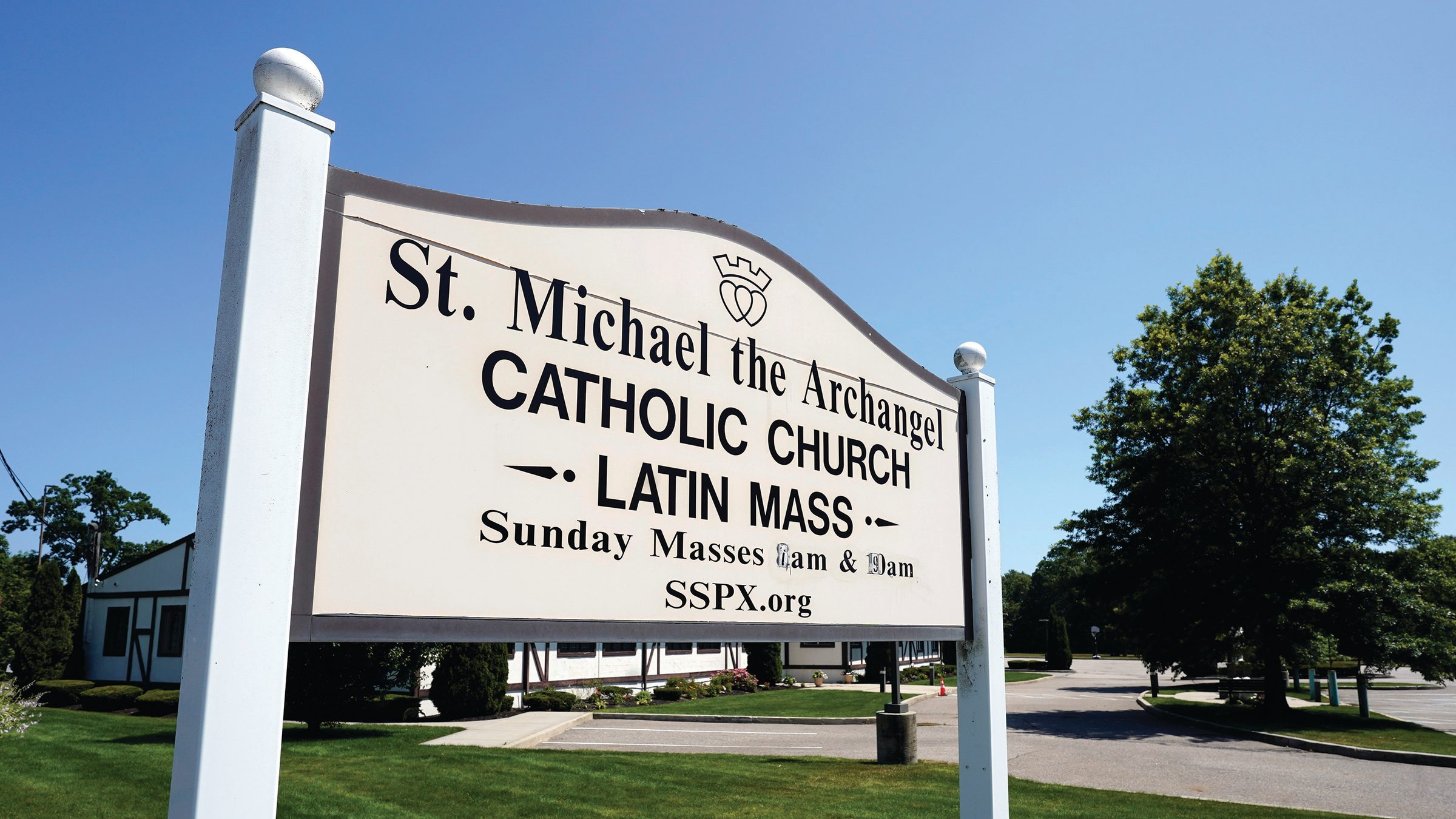

Several U.S. bishops have issued statements expressing sorrow, warning the faithful and urging prayers for unity following the Vatican's July 2 excommunication of adherents of the now-schismatic Society of St. Pius X.
The Switzerland-based SSPX – which has for decades wrangled with the Vatican in rejecting the reforms of the Second Vatican Council, incurring both previous excommunications and protracted reconciliation efforts by the Holy See – defied papal orders and entered into formal schism by ordaining four new bishops without authorization at a July 1 liturgy in Switzerland.
In its July 2 excommunication decree, the Vatican also explicitly stated that attempts to confer the sacraments of penance and matrimony involving the society's clergy are invalid. The same day, the Vatican also outlined steps for SSPX members to be reconciled with the Catholic Church.
Among the U.S. bishops weighing in after the announcement were Bishop James V. Johnston, Jr. of Kansas City-St. Joseph in Missouri; Archbishop Shawn McKnight of Kansas City, Kansas; Bishop Douglas J. Lucia of Syracuse, New York; Bishop Terry R. LaValley of Ogdensburg, New York; Bishop Donald J. Hying of Madison, Wisconsin; and Archbishop Bernard A. Hebda of St. Paul and Minneapolis in Minnesota. Each of their dioceses has SSPX communities within their territorial boundaries.
The prelates' respective messages balanced canonical precision, pastoral concern and a prayerful lament for the healing of division within the Church.
Bishop Johnston, within whose Missouri diocesan boundaries the United States headquarters for the SSPX are located, said in a July 2 statement on Facebook that the illicit ordinations "are unfortunate and indeed, a source of grief."
"While it is imperative to not abandon future efforts toward full communion and to fervently pray for such," Johnston said, "those who wish to maintain communion with the Catholic Church, including valid reception of the sacraments of Matrimony and Penance (Confession), will no longer find that possible within the SSPX."
Johnston noted he is responsible for all the human souls in his diocese, and said "in this moment, I wish to reassure the members of the SSPX within this diocese of my pastoral concern as a shepherd with a desire to assist you in this time of crisis."
Archbishop McKnight – within whose Kansas diocesan boundaries is "the largest SSPX-built church in the world" – said in a July 2 statement that the excommunications "are not intended as expressions of hostility or rejection, but as medicinal measures that reflect the seriousness of the offense and are ordered toward repentance, healing, and the eventual restoration of communion."
Addressing "those members of the faithful who have attended missions or apostolates associated with" the SSPX, he said, "They should know that they are loved by the Church and remain the object of our prayers for unity."
Archbishop McKnight noted that "many have been Catholics who sincerely desire to worship God, love the Church, and remain faithful to the Catholic tradition as they understood it."
Bishop Lucia – whose Syracuse Diocese is home to two SSPX parishes, as well as a priory and a school – said his July 2 message informing the faithful of the excommunications was delivered "with much sadness."
In his July 1 message, Bishop LaValley likewise expressed his "great sadness" over the situation.
He also said it was "of great importance to realize that the division" between the SSPX and the Roman Catholic Church "is not simply about" the celebration of Mass and the sacraments.
Rather, said Bishop LaValley, the SSPX "repudiates and denounces the teaching of the Second Vatican Council, in particular, ecumenism, religious liberty, collegiality of the bishops with the pope, and the Church's understanding of, and relationship with Judaism."
"For many years, the Church has been in dialogue with the leadership of SSPX in the hope that the group would return to full communion with the Catholic Church," said Bishop Hying in a July 2 statement.
Having noted canon law on the need for a pontifical mandate for consecrating a bishop, and that illicit consecration carries an automatic excommunication, Bishop Hying said "their continued rejection of papal authority and decision to undertake blatantly schismatic acts have harmed these discussions and wounded the path to unity."
Archbishop McKnight stressed that "the faithful should be aware that, as the Holy See has explained, the ministry exercised by the Society is not legitimate in the life of the Church: the sacraments celebrated by its ministers are illicit, and the sacraments of Penance and Matrimony administered by them are now invalid."
"Participation in the worship and apostolic life of a schismatic community" such as SSPX "objectively expresses and fosters separation from the Church's communion," he warned.
As a result, said Archbishop McKnight, "Catholics may not knowingly take part in the Society's liturgical celebrations, apostolates, or other activities.
"Such participation is not merely discouraged but is gravely contrary to the unity of the Church and, when undertaken with full knowledge and deliberate consent, is sinful," he said.
Bishop Lucia echoed that warning, saying, "I must make it very clear that today's announcement without a doubt forbids Roman Catholics of good standing to participate in and to receive the Sacraments from bishops and priests associated" with the SSPX, "including Baptism, Confirmation, the Holy Eucharist, Penance, Marriage, and Holy Orders."
Bishop Lucia also forbade the faithful "to associate oneself with SSPX churches, chapels, and schools."
He said "the only exception provided for" in canon law – the Church's main administrative code – "is danger of death," citing canons 976 and 1752.
Continued participation in SSPX pastoral activities following the Vatican's announcement would constitute "formal adherence" to the society and its schismatic state, he said.
Bishop Lucia also immediately rescinded permission for the SSPX to use diocesan and parish property for its activities.
He named several approved locations in the Diocese of Syracuse for the celebration of Mass according to the 1962 Roman Missal (sometimes called the "traditional Latin Mass") and sacraments using the preconciliar Roman Ritual.
In his July 2 statement, Archbishop Hebda also noted six locations throughout his archdiocese offered the same traditional liturgy, and said he is confident "those who prefer the Traditional Latin Mass could find a home here."
"In the ten years that I have led this local Church, I have met many sincere people who worship regularly or occasionally at the chapels of the SSPX," Archbishop Hebda said. "I have been impressed by the strength of their families and their commitment to traditional Catholic values. I realize that today’s excommunications will affect them in a particular way."
Archbishop McKnight said that "clergy and laity alike are further admonished not to adhere to the Society's schism, lest they incur the penalty of excommunication 'latae sententiae,'" referencing the automatic excommunication that occurs upon the commission of grave sins.
The archbishop encouraged "all who have participated in the Society's apostolates to remain united to the Holy Father and to seek the guidance of our priests regarding any questions that may arise from this unfortunate situation, especially if they have concerns about the validity of sacraments they may have received."
Addressing "our brother priests" in the SSPX "who may not wish to be part of this break" with the Vatican, Bishop LaValley said, "I am always open to receiving you, and assisting you in remaining within the one, holy, catholic, and apostolic Church."
All of the bishops affirmed the need to pray for the healing of the division caused by the SSPX's schismatic break with the communion of the Catholic Church.
"We continue to pray that those who have taken this step may one day be restored to full communion," said Archbishop McKnight. "The Church's doors remain open, and our hope remains that the unity for which Christ prayed may one day be fully realized. At this sorrowful moment, let us pray that the seamless garment of Christ, wounded by division, may once again be visibly restored."
"Together, let us pray as Jesus did, that the day will come when we 'may all be one' (John
17:21)," Bishop Hying concluded.