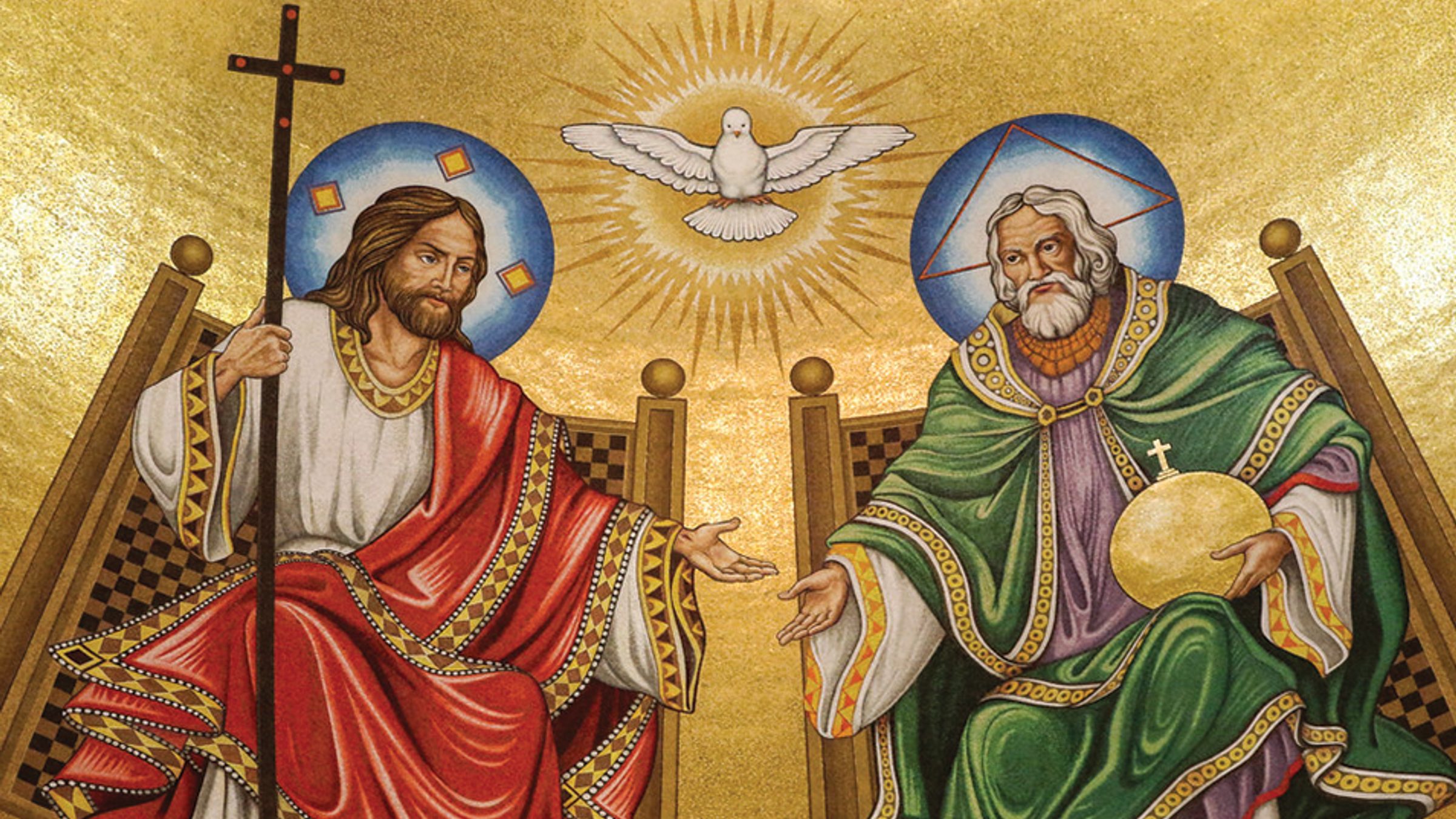


Scripture Reflection the Solemnity of the Most Holy Trinity:
Exodus 34:4-6, 8-9
Daniell 3:52, 53, 54, 55, 56
2 Corinthians 13:11-13
John 3:16-18
We draw the Easter season to a close by celebrating the Ascension of the Lord, and then Pentecost, and then the Solemnity of the Most Holy Trinity. The order of these celebrations matters. They teach a lesson. They help us inhabit the story the Scripture tells.
Think about it. Luke writes that as the disciples watched, the risen Jesus “was lifted up, and a cloud took him out of their sight” (Acts 1:9). But that doesn’t mean the disciples are left alone. “I will not leave you desolate; I will come to you,” Jesus said the night before his arrest. He said those words right after he talked about the gift of the “Spirit of truth.” The Spirit “dwells with you, and will be in you,” Jesus said (John 14:17-18). That’s Pentecost talk.
And so, what’s the lesson? It’s that as the Lord ascended and the Spirit descends, we remain in the Son who remains in the Father by the everlasting gift and power of the Holy Spirit. “I in them and you in me” is how Jesus described it as he prayed to the Father that the disciples would remain “perfectly one” (John 17:23).
The two feasts of Ascension and Pentecost simply name this new spiritual reality, that our life now is “hidden with Christ in God” (Colossians 3:3). And the Solemnity of the Most Holy Trinity simply reads from this new spirituality described in the New Testament the revelation of God: that God is Father and Son and Holy Spirit.
From many other possible examples, take the readings given this year for the feast. In them we learn that God is love (Exodus 34:6; 2 Corinthians 13:14; John 3:16). And we learn that this loving God “gave his only Son” so that those who believe might experience God’s hesed, that is, his mercy and loving kindness. This is the “grace of the Lord Jesus Christ” that Paul is talking about (2 Corinthians 13:14). This is the Son of the Father, the Son who is “one” with the Father (John 10:30). Here we recall the whole thrust of John’s Gospel, what it teaches us about Jesus, what the Nicene Creed succinctly summarizes, that Jesus is “God from God, Light from Light, true God from true God.”
And so, what the Solemnity of the Trinity teaches us is that the saving mercy of Christ that we read about in the Gospel reading from John is truly God’s mercy and not some secondary mercy. That this feast immediately follows on the heels of Pentecost, we remember that the “Spirit of truth” unites us to Jesus “the way, and the truth, and the life” (John 14:6). We remember that as the Spirit is the gift of both the Father and the Son (John 14:26; 15:26), the Spirit too is “the Lord, the giver of life.” That is, as the Spirit binds us to the Father and the Son, the Spirit too is God.
Thus, both the Scripture and the dogmatic light of the Church’s liturgy reveal to us the God who is Trinity but also the trinitarian structure of Christian existence. We remember and rejoice in what St. Maximus the Confessor called the “mystical knowledge of God;” that is, we rejoice that by believing in the Son we may now see the Father by the gift of the Holy Spirit. That is, we rejoice that God is revealed in Christ not by the means of our own darkened intellects but by the gift of the Holy Spirit; we rejoice that God reveals himself by himself and not by us.
One recalls here that great praise our Orthodox friends sing in their liturgy: “We have seen the true light; we have received the heavenly Spirit; we have found the true faith, worshiping the undivided Trinity, for the Trinity has saved us.” With them we share this faith. We celebrate with them the saving revelation of the triune God.
But then, finally, let us begin to think about what this means for the rest of the Christian life. It means that God is indeed very close to us. If Christ is God and if Christ dwells in us by the Spirit, then in the sacraments, also given in the Spirit, God draws near to us. In the sacraments Christ continues to “touch us” it says in the Catechism of the Catholic Church (1504). That’s not a metaphor but a mystical reality. That God is Trinity means that God still dwells among us.
It also means that when we celebrate Corpus Christi next week, we know that we celebrate the gift of Jesus’s true body and true blood and not merely some symbol. Which finally is how Christ keeps his promise that he remains with us “to the close of the age” (Matthew 28:20). Because Christ is God, and he can do it.