
When Peter Cooney and his younger brother Thomas began creating websites years ago, they never imagined one of their projects would place them at the center of one of the Catholic Church's biggest conversations.
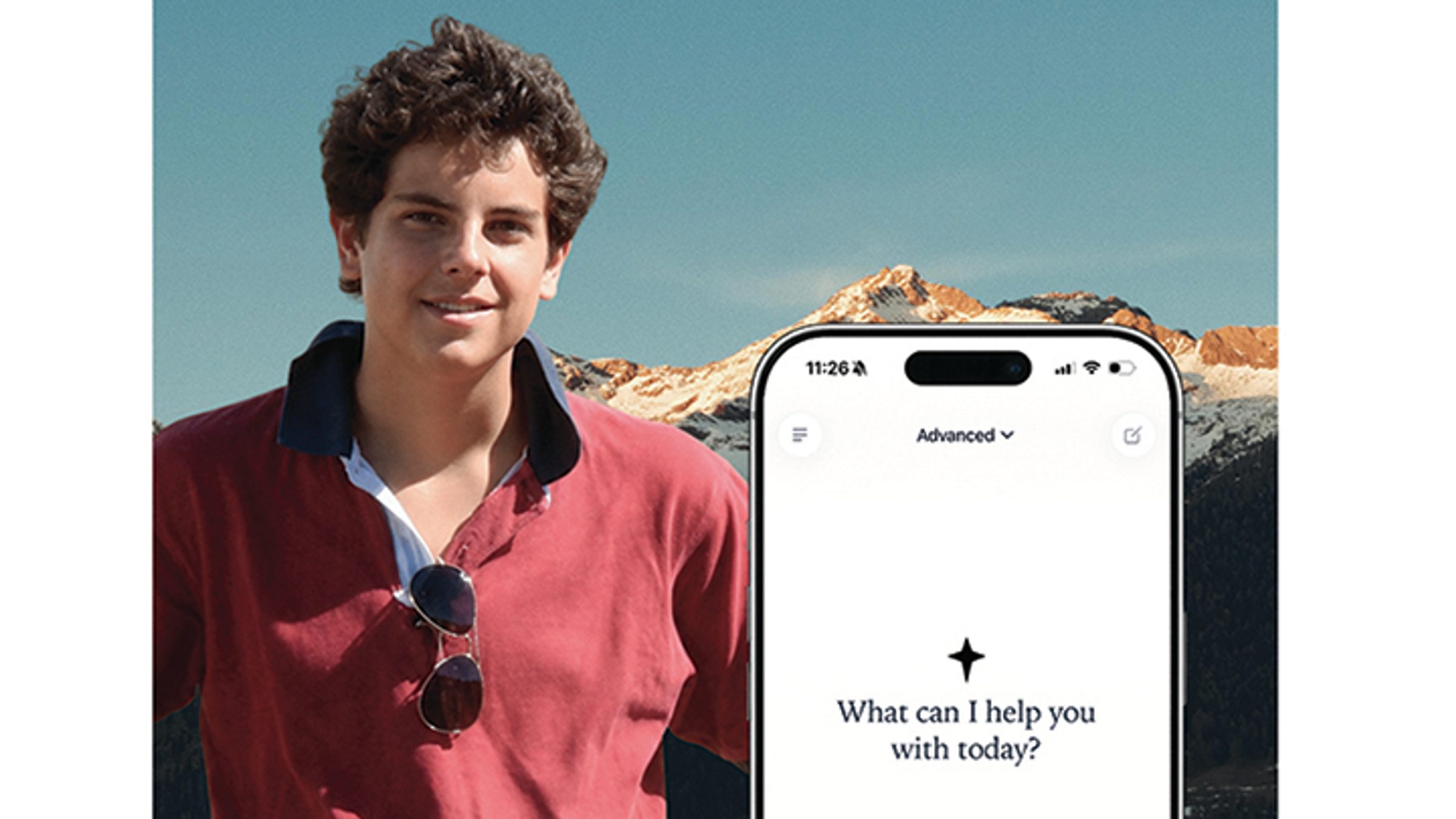
Today, the brothers are the founders of Acutis AI, an artificial intelligence platform designed to answer users' questions through Catholic teaching rather than the ethical frameworks used by many mainstream AI systems.
The launch coincided with a growing conversation within the Catholic Church about artificial intelligence.
Just months after the brothers launched Acutis AI, Pope Leo XIV devoted his first encyclical, Magnifica Humanitas, to the opportunities and dangers posed by artificial intelligence, urging developers to ensure the technology always serves the dignity of the human person rather than replacing it.
For Cooney, the pope's message affirmed the very convictions that inspired the project.
Raised in the Baltimore area, Cooney was homeschooled until high school, with daily Mass woven into the rhythm of the school day. After his family moved to the Archdiocese of Washington, he attended The Heights School in Potomac. Today, the Cooney family worships at St. Raphael Parish in Rockville and Our Lady of Mercy Parish in Potomac. Cooney, now a senior economics major at the University of Dallas, said that formation helped shape the way he and his brother approached artificial intelligence.
"We noticed there wasn't a good moral framework behind AI," Cooney said during an interview on the Rebel Saints podcast. "The Catholic Church has been thinking about morality for more than 2,000 years. Why not build AI on that foundation instead?"
According to Cooney, the brothers began working on the platform in 2025 over Christmas break after becoming increasingly concerned by the way popular AI systems handled questions involving morality, human dignity and ethical decision-making. Rather than relying solely on information gathered across the internet, they assembled a library of Catholic sources, including the Catechism of the Catholic Church, papal encyclicals, the writings of St. Thomas Aquinas and other Church documents that help shape the platform's responses.

The goal, Cooney said, was never to create what he jokingly calls "a smart Catechism."
Instead, they wanted an AI assistant capable of performing the same everyday tasks as popular platforms while approaching every subject from a distinctly Catholic perspective.
"We want it to be just as useful as ChatGPT or Claude," he said. "But instead of a secular lens, it has a Catholic lens."
For Cooney, the project is about more than developing another AI platform. It is also about encouraging more Catholics to become innovators rather than simply consumers of emerging technology.
"When you look at the biggest technology companies, very few are led by Catholics," he said. "We need more Catholics building these kinds of companies."
Their project has already drawn international attention. Since launching earlier this year, Acutis AI has grown to roughly 5,000 users in countries including the United States, Australia and the Philippines.
The platform is named for St. Carlo Acutis, the Italian teenager known for using computers and the internet to evangelize before his death in 2006.
Cooney had heard about the saint but didn’t realize how much he could relate to him until spending a semester studying in Rome, when he visited Assisi and prayed before Carlo's tomb.
"He looked like one of my friends," Cooney recalled. "He built websites. He liked computers. He grew up in a normal family. I remember thinking, 'Why can't I become a saint too?'"
Today, he frequently asks St. Carlo's intercession while working on code.
The brothers hope Acutis AI continues Carlo's mission of using technology to draw people toward Christ rather than away from Him.
"Our goal isn't to build something only Catholics use," Cooney said. "We want anyone to be able to ask questions. If they keep searching for the truth, we believe they'll eventually find the Catholic faith."
That mission also shapes how the platform interacts with users.
Unlike some AI companies that encourage users to develop personal relationships with chatbots, Cooney said Acutis AI is intentionally designed to remind users they are interacting with software, not another person.
"We don't want it pretending to be a person," he said. "We want people to know they're talking to a machine."
That distinction is especially important for children, he said.
The platform includes parental safeguards that allow parents to receive notifications when children ask about sensitive topics such as suicide, violence or other potentially harmful subjects. Parents can also review conversations and customize how the AI responds in future interactions.
Those safeguards grew partly out of concerns surrounding widely reported cases involving teenagers who formed unhealthy emotional attachments to AI chatbots.
"If parents know from the beginning that something is wrong," Cooney said, "they can have those conversations."
He believes the Church's voice is especially needed as artificial intelligence becomes increasingly woven into daily life.
While acknowledging AI will likely eliminate some jobs, Cooney expects it will also create professions that cannot yet be imagined.
His greater concern is that people will allow technology to replace their own creativity.
"If people are just lazy and hand everything off to AI, there's not going to be innovation," he said. "People will always be able to think outside the box."
Rather than viewing artificial intelligence as something Catholics should fear, Cooney believes it presents an opportunity.
Too often, he said, Catholics become consumers of new technologies rather than the people designing them. He hopes Acutis AI encourages more young Catholics to enter fields like computer science, engineering and artificial intelligence while bringing their faith with them.
"This is probably the best time to take risks," he said. "Build something. Create something. Work hard, and leave the rest in God's hands."