The Roman Catholic Archdiocese of Washington has assembled a new leadership team for its Office of Youth and Young Adult Ministry as reaching and retaining young Catholics becomes one of the archdiocese’s major pastoral priorities.
After months of consultation with parish lay leaders and priests, Cardinal Robert W. McElroy announced six goals for pastoral action over the next five years. One was stated plainly: “Reverse the Avalanche of Young People Leaving the Church.”
Those consultations found that young Catholics often drift from active participation in the Church without making a conscious decision to leave.
Parents spoke about children who had been raised Catholic but no longer practiced the faith. Young adults described peers who continued to seek meaning and spirituality outside the Church.
Cardinal McElroy appointed a Youth and Young Adult Ministry Task Force to examine ministries operating across the archdiocese, identify approaches bearing fruit and recommend ways to strengthen outreach to young people.
The Office of Youth and Young Adult Ministry for the Archdiocese of Washington now has a new leadership team: Mariana Pimiento, director of Youth and Young Adult Ministry; Catherine Cavanagh, assistant director of Young Adult Ministry; and Francesca Battista, assistant director of Youth Ministry.
Each brings a different path into the work.
Mariana Pimiento: ‘I think I’m an evangelist at heart’
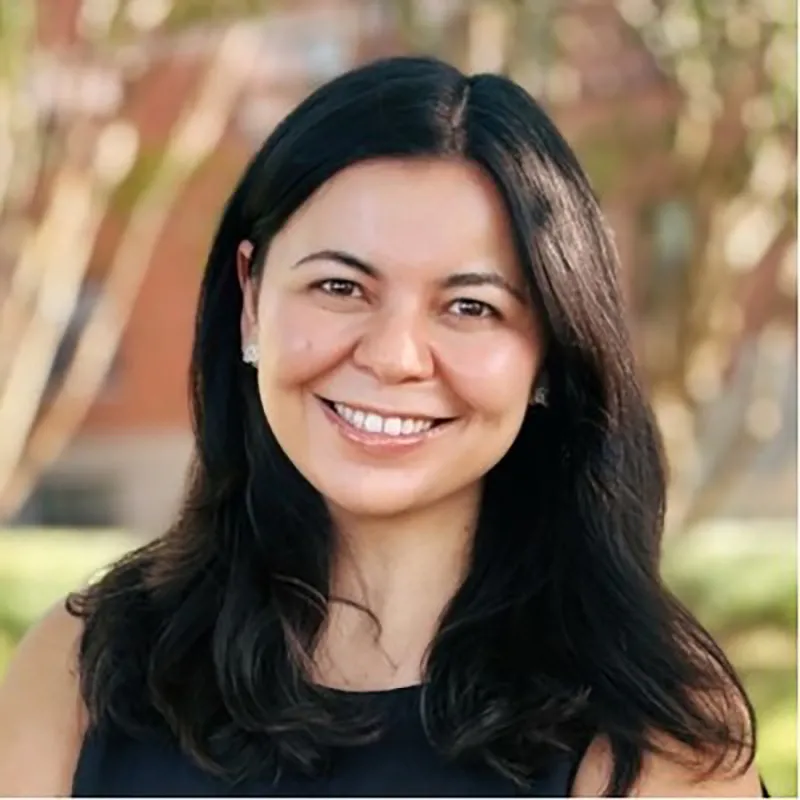
Mariana Pimiento, the new director of Youth and Young Adult Ministry for the archdiocese, knows what it is like to drift away from the Catholic Church without deciding to leave it.
Pimiento was born in Medellín, Colombia, and immigrated with her family to Alabama as a child. Catholicism was part of her family life and culture.
“I grew up Catholic. It’s woven into our culture, into our thread,” she said. “I never really saw myself as Catholic. It was just part of who I am, who my people are.”
Her relationship with the faith changed after she left Alabama to attend The King’s College in New York City.
At the small Christian college, Pimiento encountered thinkers including St. Thomas Aquinas and St. Augustine and began examining the faith she had inherited.
Her father was battling cancer. Pimiento was attending school while also working full time. The life she had imagined for herself in New York was not giving her the sense of purpose she had expected.
Then she began missing Mass.
“I never chose to leave the Church. And that’s what’s sort of scary,” she said. “I slept in one Sunday. And then another. And then another.”
Months passed.
“About nine months into college, I suddenly kind of wake up one day and I’m like, ‘I don’t think I believe in God,’” she said. “But it was never a choice I made.”
Pimiento began reading about different faiths and questioning what she believed.
“The main question I have been asking my whole life is: ‘What is true?’” she said. “Because I don’t really care about anything else if it’s not true. What’s the point?”
A friend invited her to St. Joseph’s Church in Greenwich Village, where the preaching of a Dominican friar caught her attention.
“For the first time in my life, I met somebody who lived in the truth, and you could feel it,” Pimiento said. “He had this zeal and conviction, and I’d never seen that before.”
She met with one of the Dominican priests and told him she no longer believed in God.
“He had answers, but it was the first time in a long time that I could sit in a room with someone and know that he wanted nothing from me,” she said.
Pimiento began reading Catholic writers and returned to Confession and the sacraments. The Eucharist became central to her return.
“If it was true that Our Lord was in the Eucharist, I could never walk away,” she said. “And if it wasn’t true, I couldn’t be Catholic.”
The faith she had inherited became her own.
“I just wanted to tell everybody in New York City,” Pimiento said. “It was like the biggest secret in the world, and I wanted everybody to know.”
She went on to serve as a FOCUS missionary, working with college students.
“I think I’m an evangelist at heart,” she said. “It’s not something I can turn on or off.”
Pimiento said communicating with young people requires understanding the world in which they live, including the role social media plays in how they relate to one another.
“I speak Spanish. I don’t think about it,” she said. “Okay, I speak social media. I don’t think about it. It’s just another way of communicating.”
Pimiento said the culture surrounding young people has changed, but their questions have not.
“The fabric of our society has changed,” she said. “But those questions have not changed, and the answers have not changed.”
She summed them up this way: “Who am I, and who is God?”
She also sees the loneliness that can come with a life lived online.
“At the end of the night, you can only scroll so much,” she said.
Then come the questions, she said: “What was I made for? Who am I? Who was I made for?”
Pimiento sees an opportunity for the Church in those questions.
“People are primed to receive the Gospel,” she said. “That’s what I see.”
Catherine Cavanagh: Building from what parishes know
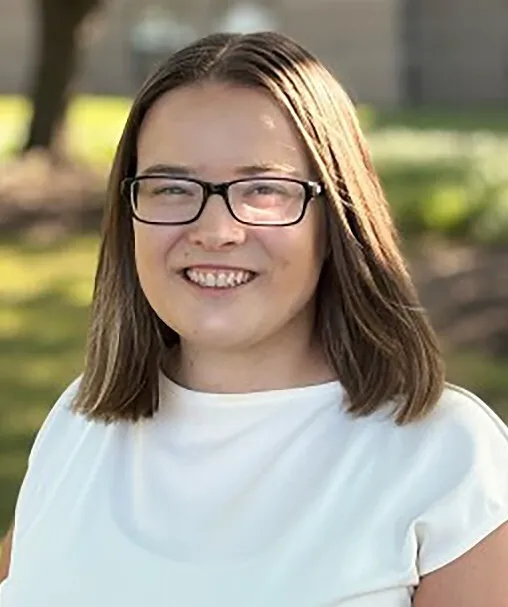
Catherine Cavanagh is starting her work by listening.
Cavanagh, assistant director of Young Adult Ministry for the archdiocese, grew up in a Catholic family on Long Island, but she took ownership of her faith while attending George Mason University in Fairfax, Virginia.
After graduation, she spent seven years working full-time in campus ministry.
“I saw the great opportunity for young adult ministry in the Archdiocese of Washington with how many young people are here,” she said.
Cavanagh said the office is working out what its support for parishes and young adults will look like. During its first months, the team has met with young adults, priests and lay leaders and learned from ministries across the archdiocese.
“I think in this beginning phase of our office they need to be heard,” she said. “We have had many priests, men and women devoted to youth and young adult ministry in the archdiocese. It is a gift to learn from their experience.”
Those conversations revealed several common themes.
“They want community they are known in, they want opportunity for formation, and reverent liturgy,” Cavanagh said.
Her work will include supporting parish programs, developing resources for local use and helping shape future archdiocesan programming.
Cavanagh hopes to draw on her experience working with student leaders.
“A large part of what I did in campus ministry was coach student leaders,” she said, “and I’m excited to translate that experience here for the archdiocese.”
Her measure of success starts at the parish level.
“One measure of success is if pastors feel they can call us to ask for support or workshop ideas to implement in their parishes,” Cavanagh said.
Francesca Battista: Depth, prayer and friendship
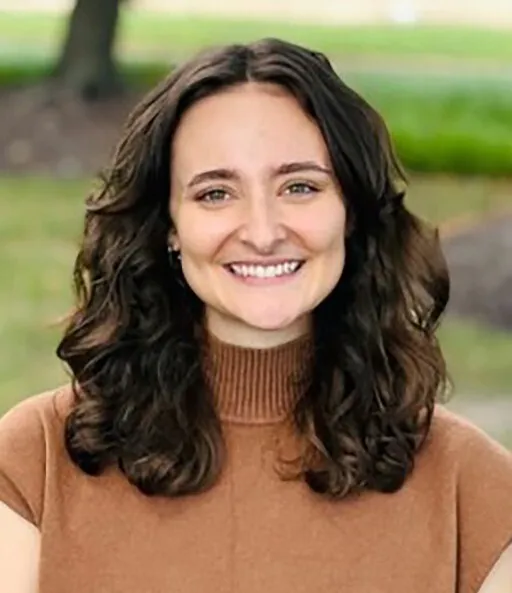
Francesca Battista, assistant director of Youth Ministry for the archdiocese, hears young Catholics asking for depth.
“Overwhelmingly, what I hear from young people is their desire to be nourished by the rich history and many ancient traditions of the Church,” she said.
Battista grew up Catholic in California and participated in youth ministry as a preteen and teenager through Opus Dei formation and her local parish. As a middle and high school student, she helped mentor younger girls through programs and summer camps.
She attended the University of California, Berkeley, where she was involved with the Thomistic Institute, FOCUS discipleship, and the Newman Catholic Community.
While in college, Battista experienced a deeper conversion after what she described as “making an honest confession for the first time in many years.”
“I was blessed to have been raised with a devotion to the communion of the saints and the Real Presence of Jesus in the Eucharist,” she said. “So once I truly brought to the Lord all that was on my heart, the sins with which I had been struggling and had been struggling to confess for many years, it was like a burden was removed from my shoulders.”
“Everything made sense in a new way,” Battista said.
College was also where she formed close friendships with other young Catholics.
At Berkeley, she found what she called “the joy of friendship within the Lord’s heart.”
“That’s part of why I think real, foundational youth ministry is so important,” Battista said. “It is vital for young souls to walk with others in their pilgrimage to Heaven.”
During college, Battista spent summers in Washington while helping lead her university’s Thomistic Institute chapter. She said the priests, religious and lay Catholics she met in the archdiocese became part of her own formation.
“It is especially poignant and mysterious to be living now as a young adult serving an archdiocese which gave me so much during my formative years,” she said.
After college, Battista served as a FOCUS missionary with undergraduate students at the University of Virginia.
Her responsibilities in the Archdiocese of Washington include forming and supporting parish youth ministers, working on archdiocesan events such as the EXULT Youth Conference and helping coordinate opportunities including the archdiocese’s planned pilgrimage to World Youth Day 2027 in Seoul, South Korea.
“We need to equip youth ministers to minister in a New Apostolic Age and to do so with the support of their local church behind them,” Battista said.
She said the teenagers she encounters want substance from their faith.
“Both those who do and do not yet know Christ have expressed to me their deep desire for joy, for real friendship, to understand the truth,” Battista said.
They also carry significant burdens.
“Many are burdened by the weight of comparison, feelings of abandonment by their peers or mentors, and intense loneliness,” she said.
“My greatest desire for young people is for them to discover the greatest of friendships, their friendship with Jesus,” Battista said.
Asked what success might look like several years from now, she pointed to prayer and parish life.
“I think success would look like a deeper prayer life for our youth and an active, flourishing youth group in most of our parishes,” she said, “animated by that characteristic Christian joy.”