
In 2025, perhaps no public policy question has generated more commentary and protest than immigration and deportation. The matter is not confined to the U.S., of course, with analogous controversies across Europe. But through recent statements by both the American bishops and Pope Leo XIV, the sharper focus has recently been on the United States.
These statements by the Catholic magisterium are appropriate applications of Catholic social doctrine. The Church is perhaps the only entity in the world with the adequate moral vocabulary and communications infrastructure to address the immigration policy in a just and equitable way.
That vocabulary has resonance in the Gospel infancy narratives, making the Advent and Christmas seasons a perfect time to consider immigration policy from the perspective of Church teaching.
The strident bickering about immigration policy in the U.S. is the sum of two inadequate – if not even immoral – treatments of the issue by the late and current administrations.
First, the prior administration didn’t merely turn a blind eye to illegal immigration, but positively encouraged it. From 2021 through 2023, the number of unauthorized immigrants in the U.S. grew by 3.5 million people. This raised the number of undocumented immigrants to about 27 percent of the U.S. foreign born population.
This was a cynical ploy designed both to flood the labor market with cheap labor, and to import likely Democratic votes. The policy had nothing to do with compassion for the immigrant or care for the refugee and everything to do with contemptuous political considerations.
Defenders of this cynical ploy now call for mass amnesty, with no regard to would-be immigrants who have kept the rules and waited their places in line, nor to the common good of the U.S. and various communities.
But the current administration has treated these undocumented immigrants harshly and sometimes brutally. Fueled by the inhumane rhetoric from the president and “Border Czar” Tom Homan, overzealous and undertrained ICE agents have consistently violated fundamental principles of due process.
While exceptions no doubt can be found, the general tenor of the agents acting under the authority of this administration is one of hostility and malevolence.
These two inadequate postures toward immigrants – unfettered, illegal entrance and mass, indiscriminate deportation – have both been addressed by Pope Leo and the U.S. Conference of Catholic Bishops.
At the conclusion of their November meeting, the bishops said, “We recognize that nations have a responsibility to regulate their borders and establish a just and orderly immigration system for the sake of the common good. Without such processes, immigrants face the risk of trafficking and other forms of exploitation.” But they added, “We oppose the indiscriminate mass deportation of people. We pray for an end to dehumanizing rhetoric and violence, whether directed at immigrants or at law enforcement.”
In response to the American bishops, Pope Leo invited “all … people of goodwill, to listen carefully to what they said.” On the one hand, Pope Leo said, “No one has said that the United States should have open borders,” adding that “every country has a right to determine who and how and when people enter.” But even when people have entered without authorization, they are due all the fairness and due process as anyone else. And dehumanizing language to describe them coarsens all public discourse. “We oppose the indiscriminate mass deportation of people,” Pope Leo continued. “We pray for an end to dehumanizing rhetoric and violence, whether directed at immigrants or at law enforcement.”
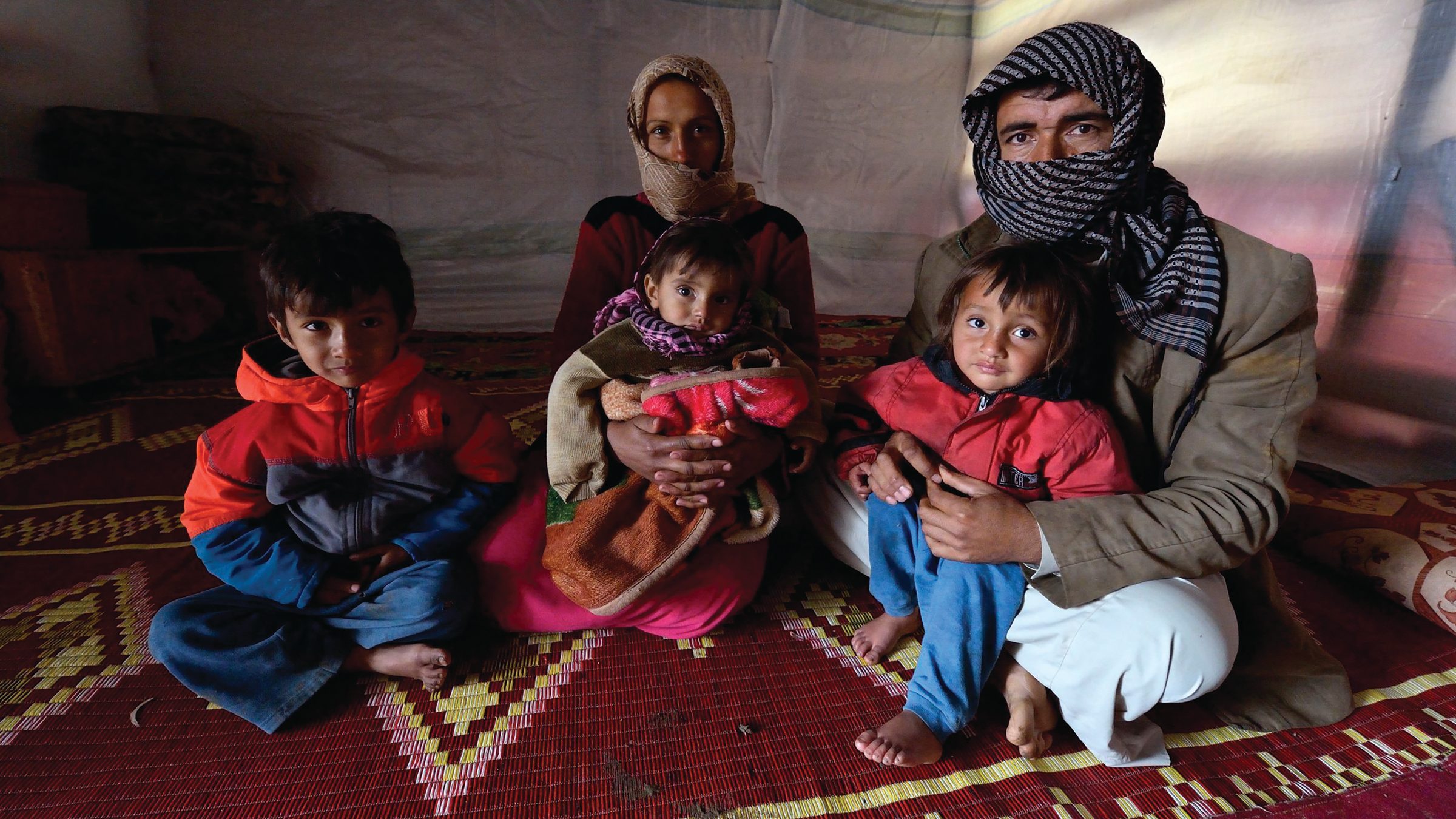
When Joseph and Mary traveled to Bethlehem, the small town was not large enough to accommodate the influx of people responding to the census demand. Thus, they took refuge in a filthy, smelly barn, placing the infant Jesus in a feeding trough. This is not unlike the plight of immigrants who find themselves in squalor and inhumane confinement, whether because communities are not able to accommodate them, or because ICE has detained them in such facilities.
Later, the Holy Family was forced to flee to Egypt to escape the threat of death. That is, they sought asylum from political and religious persecution. They were refugees. They did not want to flee. They had to. Of course, immigration and border security are very different things now than they were in the first century Roman Empire. But the empathy demanded by Christians for the political and religious refugee is precisely the same.
This is an object lesson for us this Advent and Christmas season. When we have empathy for the least of these immigrants and refugees – without regard to their legal status – we have empathy for Jesus.